Get Full Government Meeting Transcripts, Videos, & Alerts Forever!
Get email alerts on the Treatment Diversion topic
No spam. Unsubscribe anytime.
Advocates ask Fayetteville-area drug task force to pilot a social-worker-integrated response
Summary
Representatives of Arkansas Justice Reform proposed a 'Bridging Enforcement and Care' pilot to embed a licensed social worker with the Judicial Drug Task Force, presenting evidence-based frameworks and two cost models (about $120,800 and $325,800) and asking the board to consider grant and surplus funding.
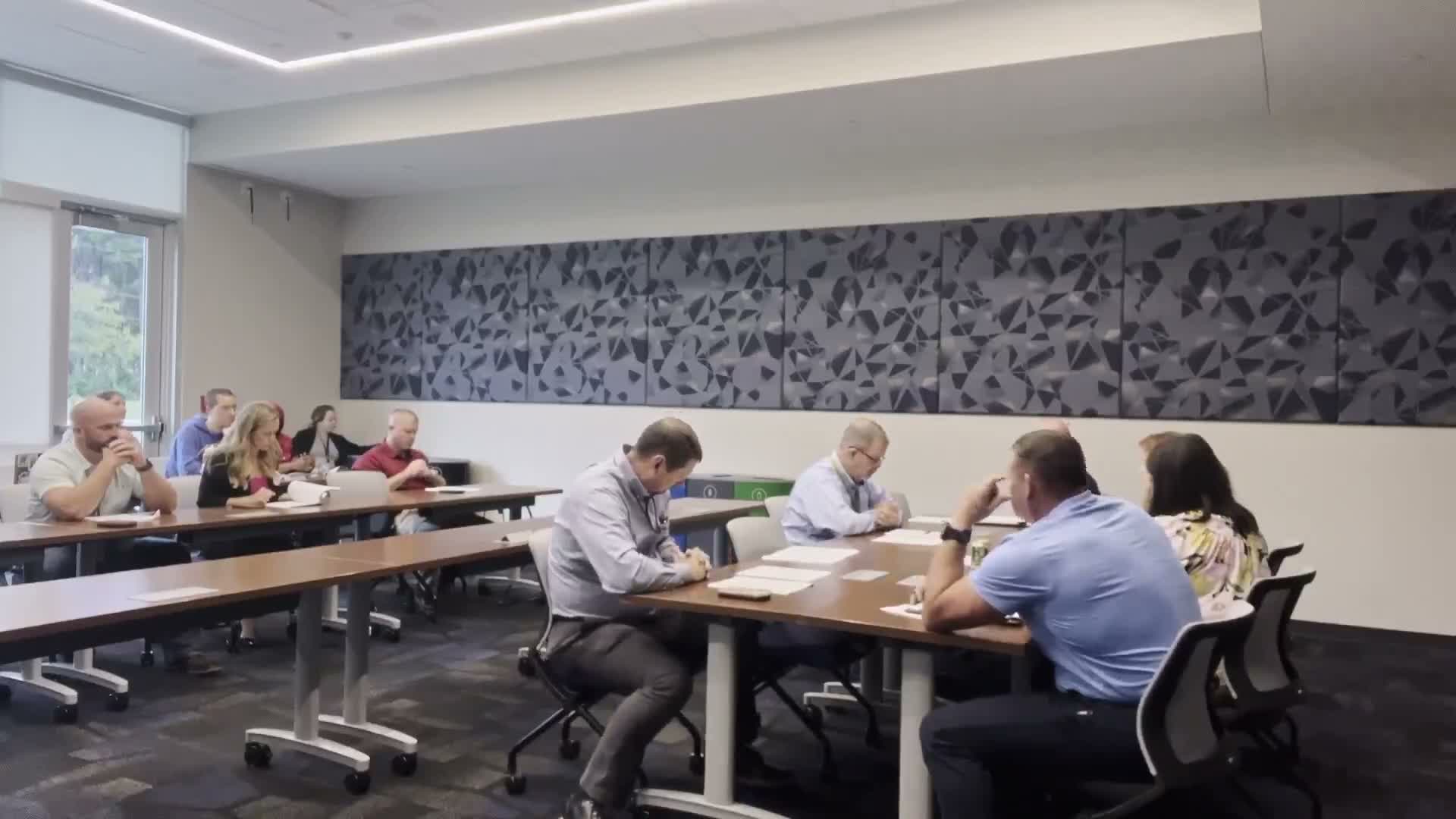
Representatives of Arkansas Justice Reform urged the Judicial Drug Task Force on Sept. 4 to start a pilot program that would embed a licensed social worker with law enforcement to divert certain responses from the criminal-justice system to treatment.
At the meeting, Ranga Sullivan said the program, titled “Bridging Enforcement and Care,” draws on DOJ and NIJ frameworks and would place a licensed social worker on the team to assess individuals’ needs at the point of contact. "In this proposal, we have an attached tool that are actual, evidence based frameworks for use versus distribution and, determination," Sullivan said, arguing that some enforcement contacts could be managed as public-health interventions.
Sullivan and colleagues presented two budget models: a basic pilot they estimated at about $120,800 (including a $90,000 salary for a licensed social worker, $20,800 for a part-time position, $5,000 for training and $5,000 for aftercare) and a more comprehensive model with housing and expanded services estimated at about $325,800. Sullivan said some grant programs the task force already receives contain language that could support these efforts.
Board members acknowledged receipt of the proposal but said they needed time to review it. The chair cautioned that legal limits apply to how certain funds—specifically forfeiture accounts—may be spent. "There are legal limitations on what we're allowed to expend that forfeiture money on," the chair said, and asked staff to place the proposal on the next meeting agenda so members could digest the materials and research funding options.
A task force representative also noted the Bureau of Justice Assistance funds and other grant sources may be eligible; speakers urged the task force to examine whether grant language allows for treatment-oriented programming.
The proposal was made during the public-comment period; no formal board vote on the pilot was taken at the Sept. 4 meeting. The task force scheduled further consideration for its next meeting, set for Oct. 22 at the Springdale Police Department.