Get Full Government Meeting Transcripts, Videos, & Alerts Forever!
Get email alerts on the Early Childhood topic
No spam. Unsubscribe anytime.
Senate passes broad early-childhood bill after heated debate over municipal camp licensure
Summary
The Connecticut Senate passed SB6 — a comprehensive bill expanding early-childhood supports and setting uniform standards for programs — after hours of debate over proposed municipal day‑camp licensure and background checks. Lawmakers split on whether state oversight would protect children or impose costly unfunded mandates that could close local camps.
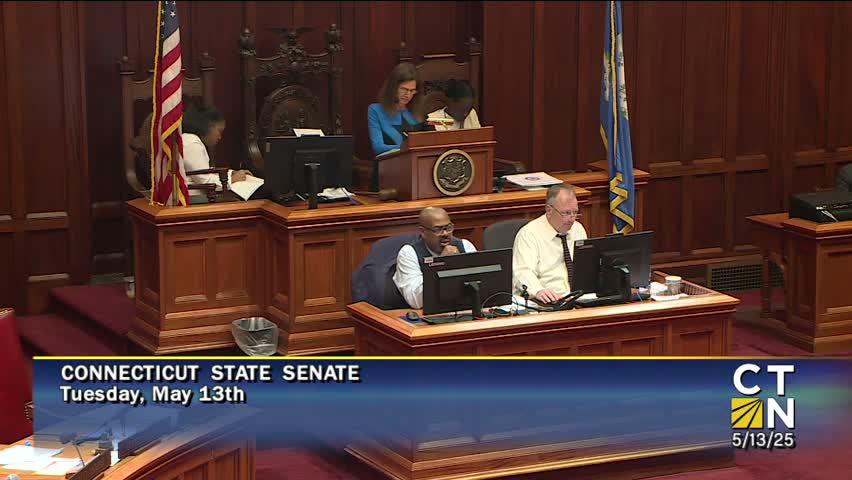
The Connecticut Senate on May 13 passed Senate Bill 6, an omnibus measure addressing early childhood supports, reporting, and summer-camp oversight, after a prolonged floor debate that centered on a contested provision to license municipal day camps and require background checks.
Senator Marilyn Moore (Senator Marr), chair of the committee that brought the bill forward, said the measure would tighten reporting, expand Help Me Grow and Early Start data sharing, increase some per‑classroom rates for Smart Start, and align oversight so parents could make consistent safety comparisons between private and municipal camps. "We want unity across how we look at children and keep them safe in our state by licensing all camps and child care," Marr said in summary remarks.
Opponents argued the municipal‑licensure sections (sections 5–6 as drafted) would be an unfunded state mandate that could force small towns to close longstanding, low‑cost municipal camps. Senator Paul Perillo offered an amendment (LCO 8294) that would strike the municipal‑licensure sections and instead fund background checks for towns; he said many municipalities testified they could not absorb the capital and staffing costs the statute appeared to require. "When a town says if you do this, we will have to close our day camp, they mean it," Perillo said.
Supporters said uniform licensure would close a safety gap between private camps (already licensed by the Office of Early Childhood) and municipal programs. Senator Luis Flexer noted parents choose camps largely on cost and convenience and deserve a consistent standard. "Every parent should know that the camp they're choosing for their child is licensed," he said.
The chamber debated multiple technical and policy amendments. A narrow technical amendment changed a required P‑20WIN report from annual to biannual. Senator Harding proposed, and the Senate later rejected, an amendment to increase criminal penalties for sexual assault committed by camp employees or volunteers; the sponsor framed it as an enhancement targeted at perpetrators who abused children at camps.
On final roll call, the Senate approved SB6 as amended (amendments A and C adopted) by a 22–12 vote (two absent). The clerk’s tally recorded 34 voting members with 22 yeas and 12 nays. Proponents said the law will improve parental information and child safety; critics warned the municipal mandates could raise local costs and reduce access to affordable summer care.
What’s next: The bill passed the Senate and will move to the House for consideration. If enacted, some licensing provisions phase in to give municipalities time to comply; opponents urged further revision or funding before implementation.