Get Full Government Meeting Transcripts, Videos, & Alerts Forever!
Get email alerts on the Library Ebooks topic
No spam. Unsubscribe anytime.
Senate approves compromise limiting library ebook contract terms after heated debate
Summary
After hours of floor debate and failed amendments, the Senate adopted an amended version of SB 1234 that restricts certain terms in ebook/digital audiobook license agreements for libraries, includes academic-database carve-outs, and a multi-state trigger before the law takes effect; the bill passed 35-1.
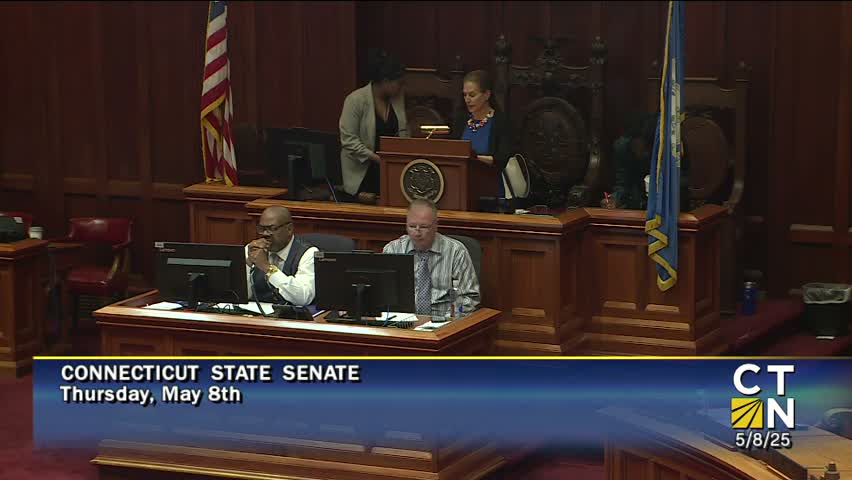
The Connecticut Senate passed SB 1234 on May 8, a contested measure aimed at changing how public libraries acquire electronic books and audiobooks. Senator Flexer, sponsor of the bill, described it as a compromise intended to protect libraries and taxpayers from repeated, high-cost license purchases for digital titles.
What the bill does: the adopted amendment narrows earlier proposals and creates a set of prohibitions and limits on the contractual terms libraries may accept for ebook and digital audiobook licenses, while explicitly excluding certain academic databases from the restriction and adding a conditional trigger: the statute will only take effect once other states with a combined population of at least 7 million adopt similar laws, ensuring Connecticut is not acting alone.
Arguments on the floor: supporters, including Senator Wong, argued that libraries face license terms that allow an ebook to be purchased by a library at many times the consumer price for a limited period or limited borrows (commonly two years or 26 borrows), imposing repeated purchases and heavy costs on municipal budgets. Senator Wong cited publisher pricing examples and said the bill would increase transparency and reduce costs to taxpayers.
Opposition and concerns: opponents framed the bill as government overreach into private contract law and warned of unintended consequences for authors and publishers; Senator Sampson argued that imposing statutory limits risks interfering with private agreements and could dampen creativity and market incentives. Other senators worried about making Connecticut law contingent on other states and about the effect on private parties.
Roll-call and next steps: after several roll-call votes on amendments (two minority amendments failed), the amended bill passed by roll call (35 yea, 1 nay). The measure was enacted as amended by the Senate and proceeds through the legislative process for enrollment and transmittal.