Get Full Government Meeting Transcripts, Videos, & Alerts Forever!
Get email alerts on the Medical Debt topic
No spam. Unsubscribe anytime.
Senate debate questions how broad medical-debt relief for surviving spouses should be
Summary
Senators spent extended floor time on SB 1469, a bill that would prevent surviving spouses from automatically becoming liable for a decedent's medical debt; discussion focused on scope, effects on hospitals/providers, probate interactions, and whether insurers or estates remain liable.
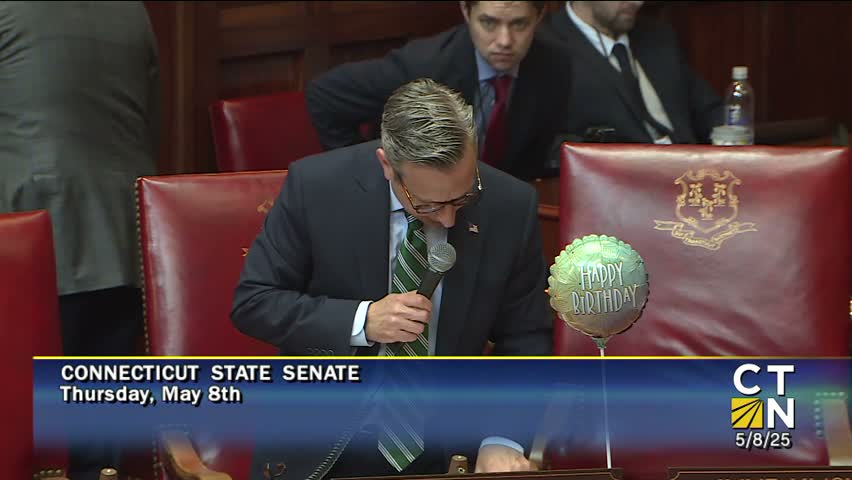
Senate substitute SB 1469, presented May 8 by Sen. Derek Lesser, would change how medical debt is treated after a patient's death by preventing an automatic transfer of liability to a surviving spouse. Lesser described the bill as intended to relieve bereaved spouses of a financial burden while leaving the decedent's estate and insurance obligations intact.
The committee chair said the bill relies on definitions already in chapter 46b of the general statutes and that the proposal is limited to medical debts under the medical-assistance/public-health focus of the Human Services Committee. "This bill is not about forgiving any debt," Lesser said. "If a debt is incurred, it must be paid; the question is whether a spouse should automatically be responsible for an expense they did not incur." The bill would leave the estate liable and would not divest insurers of obligations.
Key lines of inquiry: Senators asked whether the bill applies to all medical-related costs (including dental and physician services), whether wealthy surviving spouses would be covered, and whether hospitals could recoup lost revenue via Medicaid cost reports or uncompensated-care mechanisms. Office of Fiscal Analysis and testimony from the Connecticut Hospital Association were referenced but legislators said no detailed delta analysis was available on the floor. Senator Perillo raised concerns about hospitals' revenue streams and asked whether cost-report mechanisms would capture lost revenue; the bill’s sponsor said that was an open policy question and that the legislature is addressing Medicaid rates more broadly this session.
Other concerns: Senators pressed whether the statute could be used to relieve perpetrators of crime (e.g., a spouse who caused injury) from liability; Lesser and others said civil and criminal remedies — including wrongful-death suits — would remain available and that drafters would consider clarifying language. Questions were also raised about timing (no specific time limit in the bill), interaction with statutes of limitation, and how the change would affect pending collection suits.
Status and next steps: The measure was considered on the floor with extensive colloquy; sponsors said they would consider narrow clarifying amendments to address edge cases (for example, criminal-perpetrator exceptions) and seek further work to identify whether and how providers are compensated for uncompensated care. The transcript records the bill being discussed and transmitted to the appropriate committee stages; further committee work and fiscal analysis were discussed.