Get Full Government Meeting Transcripts, Videos, & Alerts Forever!
Get email alerts on the Ethics topic
No spam. Unsubscribe anytime.
Senate approves health‑coverage expansion to select quasi‑public board members despite ethics concerns
Summary
Lawmakers approved a bill allowing board members of five quasi‑public agencies to obtain state employee health coverage; floor debate focused on why only five agencies were included, separation between quasi‑publics and state agencies, and whether the change could create ethical conflicts or a revolving‑door concern.
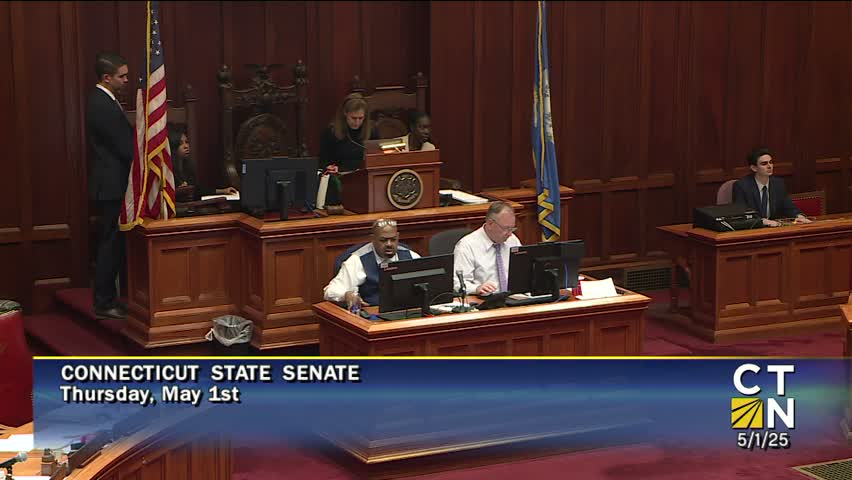
The Connecticut Senate passed legislation that would permit members of certain quasi‑public agency boards to obtain health insurance coverage under the state employee plan.
Senator Cabrera, the bill’s proponent, said the narrowly tailored proposal would broaden the pool of potential board members by offering a state health benefit to people who serve on quasi‑public boards whose members are nominated and approved by both chambers. He cited five agencies targeted by the change, including the airport authority, the Connecticut Health and Educational Facilities Authority and analogous entities, and described the move as a recruitment tool with a net‑neutral fiscal impact.
Senator Wong, Senator Sampson and others pressed why the change applied to only five quasi‑publics and whether it undermined the statutory distinction that makes quasi‑public agencies legally separate from state government. Senators raised concerns about the appearance of impropriety, the potential for an end‑run around rules governing sitting legislators taking state positions, and committee votes that showed bipartisan opposition. Senator Harding introduced an amendment intended to prohibit sitting legislators from serving on quasi‑publics during their terms; the amendment was debated and then failed on a roll‑call vote. After further debate the Senate passed the bill as presented.
Floor discussion repeatedly cited the need for transparency and for safeguards against appearance of undue influence when board seats and state benefits intersect with legislative confirmations.