Get Full Government Meeting Transcripts, Videos, & Alerts Forever!
Get email alerts on the Public Safety topic
No spam. Unsubscribe anytime.
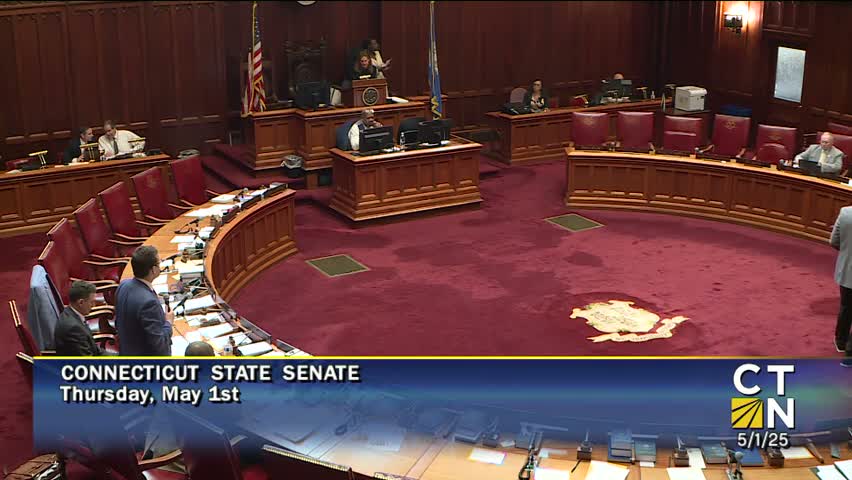
Senate approves police reporting changes after debate over supplemental medical incident reports
Summary
Lawmakers approved revisions to uniform accident and peace officer reporting to require a supplemental report when an officer observes an emergency medical condition; senators clashed over duplication of paperwork and potential burdens on officers and municipalities.
The Connecticut Senate voted to pass a bill updating uniform investigation and accident reporting and adding requirements for a supplemental report when a person has an emergency medical condition while within a peace officer’s direct audio/visual contact or custody.
Senator Gaston described an amendment that fixed a minor technical error and summarized the bill’s intent: a peace officer would prepare a report describing the situation and, on request, provide a copy to the person who experienced the medical condition. The bill also directs the Department of Transportation commissioner to study changes needed to align crash reporting with federal model minimum uniform crash criteria and submit recommendations by July 1, 2026.
Senator Ciccarella and others pressed for clarification about whether the new supplemental report duplicates existing CAD reports, accident/incident reports, or body‑camera evidence and asked how officers would produce the form quickly and efficiently. Senator Gaston and supporters said the supplemental report is intended to increase efficiency and transparency for individuals requesting information and to capture officer observations that might not be in CAD or EMS reports.
Senator Ciccarolo proposed an amendment (LCO 7666) to strike section 2 of the bill — arguing it would create duplicative burdens — and asked for a roll‑call vote; the amendment failed. The Senate then voted on the bill as amended and the clerk announced the legislation passes.
Floor debate focused on balancing administrative burden on law enforcement with public‑interest transparency following prior high‑profile incidents cited by proponents.