Get Full Government Meeting Transcripts, Videos, & Alerts Forever!
Get email alerts on the Appointments topic
No spam. Unsubscribe anytime.
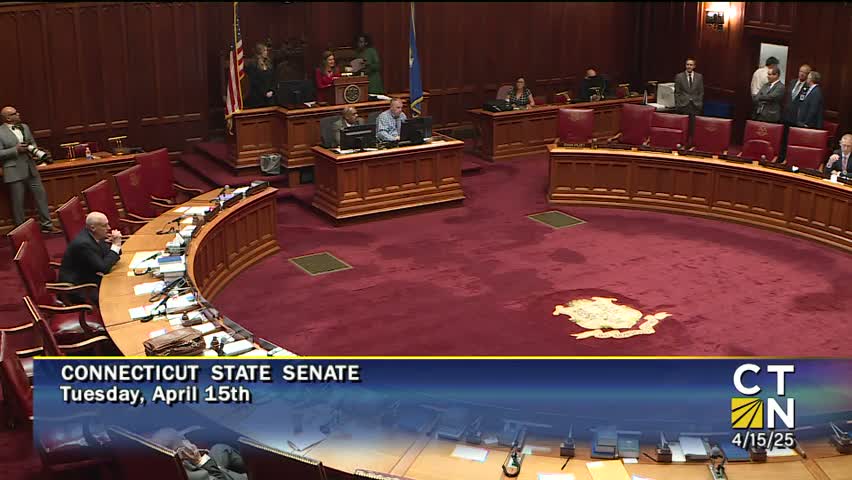
Senate Confirms Marissa Gillette as PURA Chair despite GOP Walkout and Ethics Allegations
Summary
The Connecticut Senate on April 15, 2025, reappointed Marissa Gillette as chair of the Public Utilities Regulatory Authority. Her confirmation followed a heated floor exchange in which a Republican senator alleged a quid‑pro‑quo appointment scheme and announced a walkout; Democratic senators defended Gillette’s consumer‑protection record and the resolution was adopted.
The Connecticut State Senate on April 15 reappointed Marissa Gillette to another term as chair of the Public Utilities Regulatory Authority, voting to adopt House Joint Resolution No. 68 after an intense floor debate that included an ethics allegation and a Republican walkout.
Senator Duff, the majority leader, opened consideration of the nomination by summarizing Gillette’s record at PURA, including consumer restitution and fines his remarks said the office had recovered and a series of rate cases upheld by the courts. "She has worked to bring down those rates where many times that never would have happened in the past," Duff said in support.
The confirmation process turned contentious when Senate Republican Senator Harding cited media reporting alleging that "in return for a vote, allegedly... a senator was promised an appointment to a PURA board that pays almost $200,000 a year," and said he and his Senate Republican colleagues would "walk out on this vote" rather than be "complicit." Harding framed his action as enforcing the rule against offering jobs for votes and urged colleagues to pause and seek answers rather than proceed.
Senate Democrats on the floor rejected the quid‑pro‑quo characterization and defended Gillette’s record. Senator Slapp said Gillette had "a proven track record of trying to lower rates, standing up to special interests," and pointed to the office’s consumer recoveries and court victories. Senator Looney called the allegations "incongruous" with the record and urged an up‑or‑down vote, noting that PURA decisions had been repeatedly tested and upheld in court. "I would urge the members to vote in the affirmative because we are reconfirming someone who has been doing exactly the kind of job that we hoped would be done by an appointee in this position," Looney said.
Senators also discussed the limits of PURA’s authority, with Senator Anwar noting that roughly half of retail bills come from supply costs outside PURA’s jurisdiction and that transmission is federally regulated. Supporters argued that while PURA cannot control every driver of energy prices, Gillette had used the tools available to protect ratepayers.
An immediate roll call vote was held. The clerk announced the machine tally and the president declared that the resolution was adopted.
The confirmation was followed by a sequence of additional nominations and bills on the April 15 calendar. The Senate moved on to confirm other nominees and pass technical and policy bills before adjourning for the day.
The Senate record notes recusal(s) in the proceedings; the journal will reflect those recusals and the recorded votes.
What happens next: With the resolution adopted, Marissa Gillette will continue as PURA chair pending any subsequent administrative or legal developments. The Senate proceeded to consider and adopt additional nominations and legislation later in the session.