Mountain View council backs staff'recommended SB 79 approach, urges ministerial AB 130 process and downtown focus later
Loading...
Summary
At a Jan. 27 study session, staff urged a limited local approach to implement SB 79 and a ministerial process for AB 130 projects; council supported staff'recommended objective standards and historic-resource exclusions while asking staff to prioritize downtown protections and to pursue further TOD planning later.
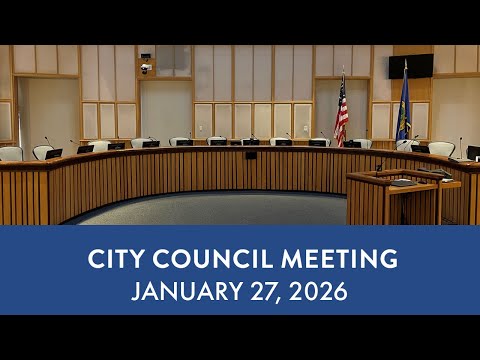
Community Development Director Christian Murdoch presented a technical briefing to the Mountain View City Council on Jan. 27 about two recent state housing laws and how the city should respond. Murdoch said SB 79, effective July 1, 2026, requires cities to allow high-density housing within a half-mile of Caltrain and VTA light-rail stations and sets qualifying criteria — including a minimum of five dwelling units per project and density/FAR thresholds — while AB 130 created a statutory CEQA exemption for certain housing projects and a strict 30-day deadline for final local action after specified milestones.
Why it matters: The laws sharply limit local discretionary review and create short timelines that can lead to projects being deemed approved if the city does not act. Murdoch told the council that preparing a full TOD alternative plan under SB 79 is “akin to a precise-plan type of effort” because of parcel-level density transfers, required environmental review for receiving sites, and HCD review; that work could take many months and would compete with staff'priorities. For AB 130, Murdoch highlighted the operational risk that projects will be deemed approved if tribal consultation or objective-standards consistency reviews do not conclude within the statutory window.
What staff recommended and why: Staff recommended “Approach B” as the practical near-term path: adopt a limited ordinance to exclude historic resources already listed as of 01/01/2025 from SB 79 eligibility and adopt objective development standards (building off the R3 zoning update) to shape SB 79 projects while minimizing deferral of the council'adopted work plan. For AB 130, staff recommended establishing a ministerial approval process for qualifying projects, paired with courtesy notice and a limited written comment opportunity, to meet the statute''s time limits without risking deemed approvals.
Public reaction: Dozens of public commenters, led by neighborhood preservation groups, urged the council to adopt a stricter downtown-focused alternative (approach C) or at least prioritize downtown protections. Robert Cox (livable Mountain View) urged "approach C and a tighter timeline" to protect Castro Street; multiple residents told the council a focused downtown plan is needed to preserve the area's character and small businesses. A VTA planner, Robert Swirick, urged coordination so projects include multimodal transportation improvements.
Council response and outcome: Council members pressed staff on technical details (how residential capacity is shifted, CEQA implications for TOD alternative plans, HCD review timing, and staffing needs). The council took a series of straw polls and votes that give staff direction: they unanimously agreed to pursue the concept of a TOD alternative plan and to treat Approach B (historic-resource exclusions + objective SB 79 standards based on R3) as the baseline. Council also unanimously signaled interest in considering a downtown-focused TOD alternative plan (area H) in a future work plan cycle. On AB 130, the council voted to direct staff to prepare a ministerial approval process (staff Option 1) to meet statutory timelines; the vote passed 6-1 (Council Member Showalter opposed). City Manager Kimber McCarthy and staff said completing any focused TOD alternative plan would likely require pausing or deferring some other advanced-planning projects to free staff capacity.
What's next: Staff will return with ordinance language and implementation steps for the recommended approach, begin work on objective development standards tied to the R3 zoning update, and draft a ministerial AB 130 ordinance including proposed courtesy notices and a written comment mechanism. Council indicated it wants historic-resource exclusions adopted quickly and asked staff to scope a downtown-focused alternative plan for later work-plan consideration and potential HCD submittal.