Get Full Government Meeting Transcripts, Videos, & Alerts Forever!
Get email alerts on the Social Equity Council topic
No spam. Unsubscribe anytime.
House adopts changes to Social Equity Council, adds removal process and 120‑day deadline for financial assistance decisions
Summary
The Connecticut House approved a strike‑all amendment to a Social Equity Council bill that adds a removal process for absentee members, requires a three‑year strategic plan and ethics training, and sets a 120‑day deadline for DECD and the council to act on revolving‑loan financial assistance applications.
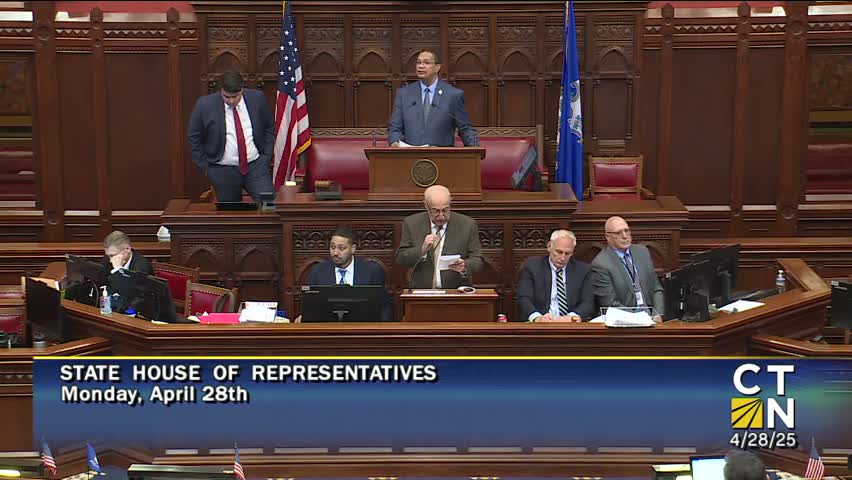
The Connecticut House on April 25 adopted a strike‑all amendment to legislation aimed at strengthening the Social Equity Council that oversees parts of the state's cannabis social‑equity programs.
Representative Lamar, the bill's proponent, said the amendment creates a clearer process for the council to remove members who “fail to attend three consecutive meetings or who fail to attend 50% of all meetings held during any calendar year,” and instructs the appointing authority to fill the unexpired term with attention to racial, gender and geographic diversity. Lamar also described additions requiring a three‑year strategic plan, a code of ethics and annual ethics training for council staff and members.
Why it matters: supporters and critics said the changes aim to increase transparency, maintain quorum, and speed decisions on financial assistance tied to cannabis social‑equity aims. The bill sets a 120‑day deadline for the Department of Economic and Community Development (DECD) and the Social Equity Council to approve or deny completed applications for low‑interest loans and related financial assistance from the revolving loan fund.
Debate and key points: Representative Reticuliano asked whether the three‑meeting rule accounts for medical emergencies; Lamar said the provision applies to unexcused absences and that excused absences (such as for medical reasons) would not count toward the three‑meeting threshold. Members pressed for clarity on who administers ethics training; Lamar said it is contemplated that the Office of State Ethics or a licensed trainer would administer the training under contract.
Several members raised questions about the council's existing bylaws and frequency of meetings; Lamar said the statute prescribes membership and that the council has internally developed bylaws. The bill also requires the council to submit its strategic plan to the governor and the appropriations and general law committees.
Vote and outcome: The amendment and the bill as amended passed on the floor. As announced by the clerk, the roll call for House Bill 6,930 as amended recorded 114 yeas and 30 nays, with 7 not voting; the bill passed as amended.
What happens next: the law clarifies internal governance, sets deadlines for financial decisions tied to the revolving loan fund, and is intended to provide a predictable process for council appointments and removals. Implementation details (such as which vendor administers ethics training) are anticipated to be worked out between the council and state ethics authorities.
Ending: The House moved on to remaining business after passage of the bill; the session concluded for the day with the next sitting scheduled for Wednesday at 10:30 a.m.