Get Full Government Meeting Transcripts, Videos, & Alerts Forever!
Get email alerts on the S1553 Early Voting Municipal Cap topic
No spam. Unsubscribe anytime.
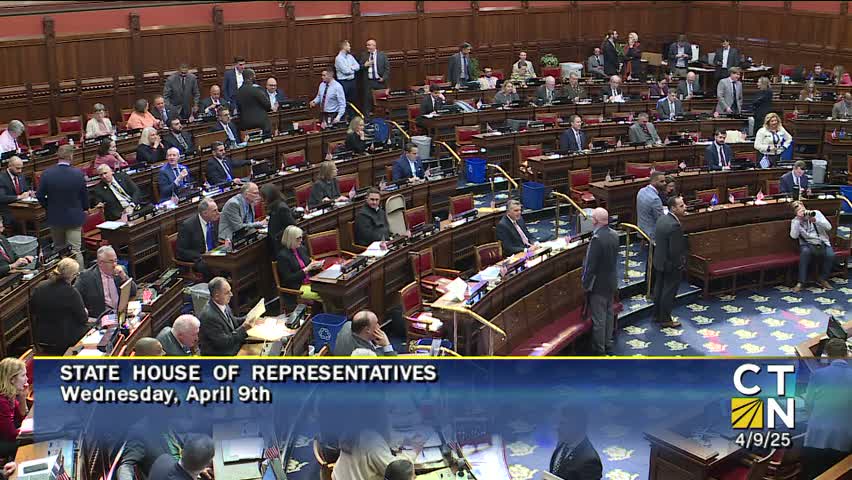
House passes emergency bill excluding Easter Sunday from early voting and suspending municipal spending-cap for one year
Summary
The House passed emergency certified S.B. 1553 to exclude Easter Sunday from early voting for a special election and to suspend the municipal revenue-sharing spending cap for one year to give towns budget flexibility; the bill was immediately transmitted to the governor.
The Connecticut House approved emergency certified Senate Bill 1553 on April 9, 2025. The measure has two principal provisions: it removes April 20, 2025 (Easter Sunday) from the early-voting period for an upcoming special election so that voters and officials may observe the holiday, and it suspends the municipal revenue-sharing account spending-cap penalty (2.5% cap enforcement) for one year to provide municipalities flexibility amid end-of-ARPA budgeting cycles.
Representative Cavros DeGraw, the bill sponsor, told the chamber the first section excludes the Easter Sunday date so affected towns receive the full five-day early-voting period, and the second section temporarily suspends a potential municipal penalty for exceeding the cap. Representative Zullo supported the timing for early voting adjustments; Representative Mastro Francesco and others raised questions about the one-year scope and the lack of a committee hearing because the measure was certified as an emergency.
The House passed the emergency certification and then, without objection, suspended the rules and immediately transmitted the measure to the governor for signature.
The suspension of the cap is limited to one year and sponsors said the change is intended to address an immediate budgeting mismatch as federal ARPA funds expire and towns finalize budgets.