Get Full Government Meeting Transcripts, Videos, & Alerts Forever!
Get email alerts on the Consumer Protection topic
No spam. Unsubscribe anytime.
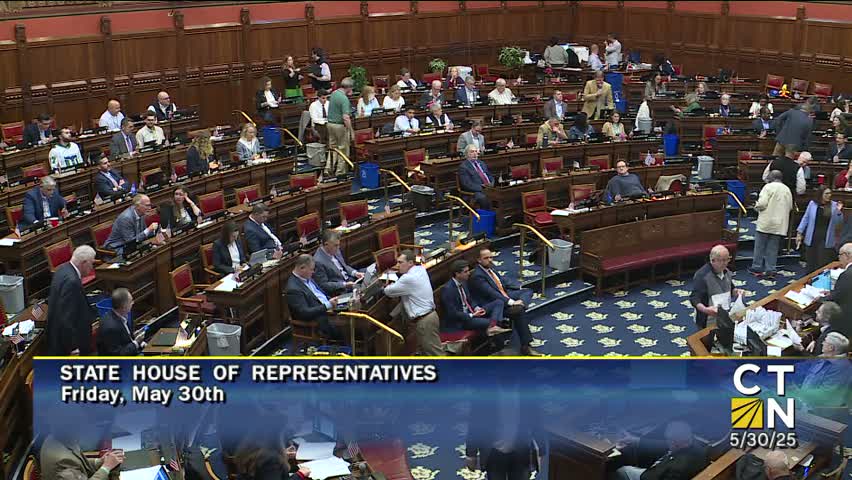
House moves to regulate residential real‑estate wholesaling with registration, disclosure and a short cooling‑off period
Summary
Lawmakers voted to regulate residential real‑estate wholesaling by requiring DCP registration, a seller disclosure and a 3‑business‑day rescission (cooling‑off) period, limiting initial wholesale contracts to 90 days and prohibiting filing such contracts as recorded liens; sponsors said regulation increases transparency without banning the practice.
The House adopted a measure to bring residential real‑estate wholesaling into a light regulatory framework designed to protect sellers while allowing the business model to operate.
Representative Lamar (General Law) summarized the bill nd the accompanying amendment: wholesalers would register with the Department of Consumer Protection, provide a standardized disclosure to sellers before contract execution that explains the differences between a wholesaling contract and a brokered sale, and give sellers a three‑business‑day right to rescind the wholesale contract without penalty. The initial wholesale contract term would be capped at 90 days (extensions possible by written agreement), and wholesalers would be barred from recording a wholesale contract as a recorded lien on town land records.
Sponsor Lamar said the bill is intended to preserve legitimate, useful wholesaling activity while reducing opportunities for consumer confusion, particularly for homeowners unfamiliar with a sale of contract rather than a listing. "We don't want to ban the service," he said, "but we do want transparency and a registration so sellers understand the contract they are signing." Several members asked detailed questions about appraisals, whether sellers must obtain independent advice and what happens in tight markets when a contract is reassigned quickly during a rescission window.
The House adopted the registration and disclosure approach after committee review and stakeholder engagement; supporters said the approach mirrors protections other states have enacted and balances consumer protection with market access.
What happens next: DCP will be authorized to adopt regulations and a registration system if the bill becomes law; enforcement mechanisms cited in the bill rely on consumer‑protection remedies.