Get Full Government Meeting Transcripts, Videos, & Alerts Forever!
Get email alerts on the Transportation topic
No spam. Unsubscribe anytime.
House advances broad DMV omnibus covering driver rules, safety training and e‑bike classification
Summary
Lawmakers debated and adopted a 90‑page DMV omnibus (HB 7160) that touches driver license renewal, video safety presentations, highway work‑zone training, 'yellow envelope' support for people with cognitive impairment, e‑bike and micro‑vehicle rules, and payment‑plan options for overdue fees. Several amendments were considered and some adopted.
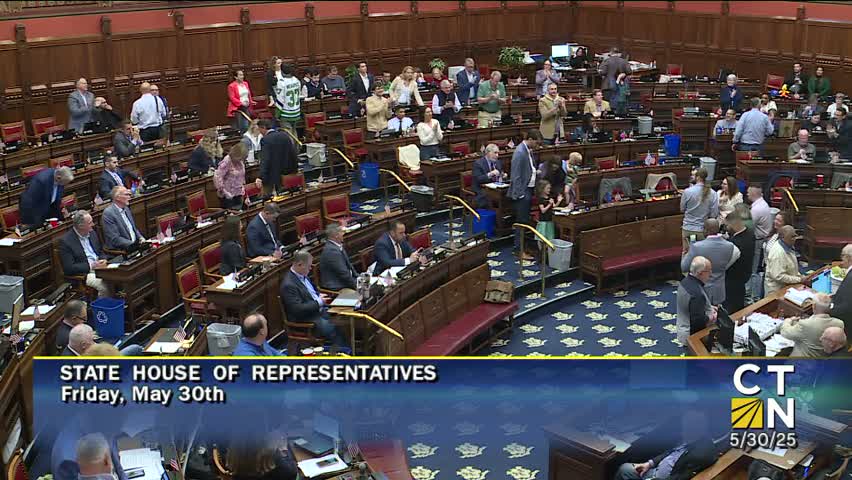
The Connecticut House took up and adopted substantial amendments to a comprehensive Department of Motor Vehicles omnibus bill (HB 7160), a multi‑topic measure addressing licensing, safety programs and vehicle classifications.
Representative Berger Cavallo, chairing the presentation on the floor, summarized a long set of changes ranging from technical titling processes for older vehicles and expanded retention rules for dealer records to new highway work‑zone and roadside safety training and a new DMV‑administered "yellow envelope" program for drivers or passengers with cognitive or physical impairments. "This bill is as comprehensive as I can give you without keeping us all here all night," she said while outlining the 91‑page amendment.
Key provisions adopted on the floor include:
- An eight‑hour safe driving course fee update and expanded driver‑retraining language; - Reciprocal suspension for DUI/BUI offenses affecting both motor vehicle and vessel operation; - A new DMV highway work‑zone safety awareness program (maximum administrative fee discussed on floor was $200); - Yellow envelopes and training for first responders so people with cognitive impairments can be identified and assisted at the roadside; - Clarifying and classifying rules for e‑bikes (class 1, 2 and 3) and some limited allowances for class 1 bikes on trails; and - A new option for motor vehicle payment plans with a small enrollment fee to avoid license suspensions for unpaid fines.
Several members pressed for implementation detail, technology readiness and municipal impacts. Representative Kennedy asked whether the yellow‑envelope training would cost municipalities; the chair replied the program is voluntary and the training would be offered at no charge.
The floor also considered a transportation‑safety amendment that would have boosted criminal penalties for reckless driving in work zones and expanded distracted‑driving enforcement; after procedural review found part of that language raised mandatory judiciary referral concerns, the sponsor withdrew the amendment to avoid derailing the larger omnibus package.
What happens next: The omnibus passed the House with adopted amendments; affected state agencies will need to publish implementing regulations and plan technology and training rollouts with the timelines discussed on the floor.