Get Full Government Meeting Transcripts, Videos, & Alerts Forever!
Get email alerts on the Labor Unions topic
No spam. Unsubscribe anytime.
Connecticut House approves measure letting striking workers seek unemployment after 14 days
Summary
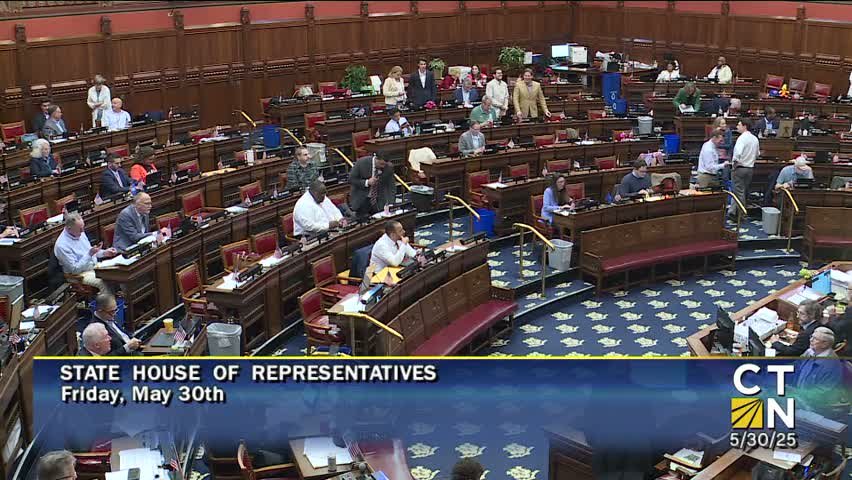
After hours of debate, the House passed Senate Bill 8 (as amended), which would allow workers who have been involved in qualifying labor disputes to apply for unemployment benefits after 14 consecutive days off the job. Supporters described it as a safety net; opponents warned of costs and business impacts.
The Connecticut House voted to pass Senate Bill 8, as amended, allowing workers involved in qualifying labor disputes to become eligible for unemployment benefits after 14 consecutive days on strike.
Representative Sanchez, the bill—o-sponsor and chair of the labor committee, told the chamber, "This bill makes striking workers eligible for unemployment benefits after they have been on strike for 14 consecutive days." He said the change would narrow current disqualifications and added the measure includes administrative funding to update Department of Labor systems to handle claims.
Supporters said the change provides a limited, temporary financial lifeline to employees who lose wages while negotiating collective‑bargaining agreements. Representative Canino, who defended collective bargaining and the role of unions, said the provision aims to protect workers who take a last‑resort action to press for better pay and working conditions.
Opponents pressed the bill—or months of floor debate. Representative Weir warned of long‑term effects on businesses and described going on strike as a deliberate decision: "This is 100% a choice," he said on the floor while urging colleagues to consider impacts on employers, local jobs and the unemployment trust fund. Other members repeatedly cited Pratt & Whitney and large manufacturers as examples of employers whose relocation decisions could be affected by shifting labor rules.
Lawmakers also pressed fiscal and technical questions. Representative Weir asked about the fiscal note; the proponent said the administration estimated roughly $394,000 to implement related software and administrative changes (proponent—haracterization reported on the floor). Several members sought more detail on which types of labor disputes would qualify and how the Department of Labor would adjudicate claims.
Floor amendment debate included a withdrawn proposal to require unions that maintain strike hardship funds to disclose balances annually; sponsors withdrew that amendment after a short procedural exchange. The final passage was recorded and read by the clerk on the House floor; the bill passed in concurrence with the Senate.
What happens next: The bill proceeds in the legislative process for any further steps required before becoming law. The House debate showed the issue divides members on economic‑competitiveness and labor‑policy grounds, and the proponent and opponents said they expect the governor and executive agencies to play roles in implementation and oversight.