Get Full Government Meeting Transcripts, Videos, & Alerts Forever!
Get email alerts on the Retirement Savings topic
No spam. Unsubscribe anytime.
House passes expansion of MyCT Savings to include personal care assistants after hours of debate
Summary
The House approved a substitute for Senate Bill 1221 to add personal care assistants to the myCT savings automatic‑enrollment retirement program while keeping an opt‑out and requiring a fiscal intermediary to administer enrollment and penalties. Lawmakers debated IRS risks, fiduciary roles and program returns before passage.
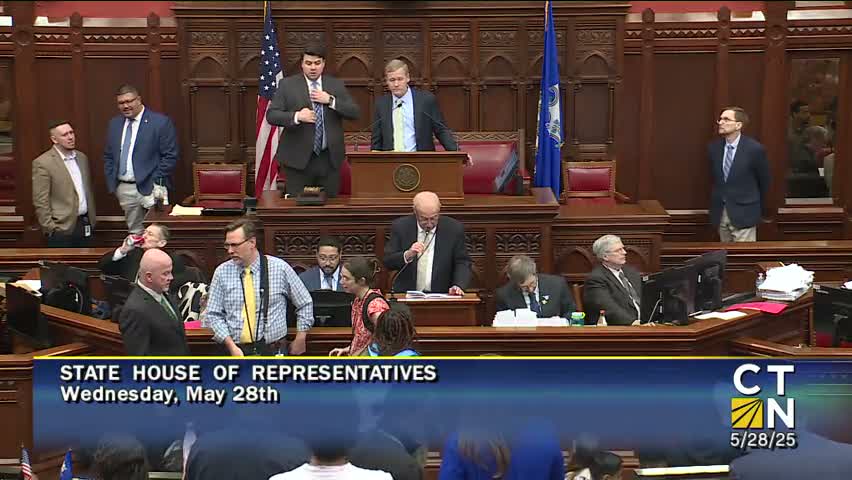
HARTFORD — The House on May 28 passed a substitute for Senate Bill 1221 to expand the myCT savings automatic‑enrollment retirement program to include personal care assistants (PCAs), sending the measure back to the Senate in concurrence.
Representative Jason Sanchez, the bill's proponent, told the chamber the measure "makes various changes to the Connecticut retirement security program" including adding PCAs effective July 1, 2026 and adjusting default contribution rules to align with federal law. He described myCT savings as an automatic, state‑run program that applies to employers with five or more employees and allows workers to opt out.
Opponents pressed for clarifications about who would administer enrollment and who would face penalties. Representative Weir repeatedly said the policy "is not the role of the government" if it exposes unsophisticated savers to unexpected tax penalties, noting that myCT is structured as a Roth IRA and warning that "a PCA could be subject to a penalty through the IRS" if contributions push them past annual Roth limits. Sanchez and supporters answered that consumers ("grandma or grandpa," as Weir put it) would not be responsible for enrollment: the comptroller's office and a contracted fiscal intermediary would enroll PCAs and handle payroll interactions.
The debate included technical explanations from both sides. Sanchez said participants would be automatically enrolled but allowed to opt out; he also said the program uses Roth IRAs and that the comptroller's office and a 15‑member board provide governance and investment oversight. Representative Weir and others raised concerns about investment returns and whether staff or the comptroller are registered investment advisers; Sanchez and others said the program relies on outside administrators and a board with financial expertise.
After extended questioning and comments from multiple members, the House conducted a roll‑call vote. The clerk announced the tally and the bill "passes and concurs with the senate." The chamber recorded the formal vote and the passage concludes the House's action on the measure.
What happens next: Because the House voted to concur, the bill moves along in the legislative process consistent with legislative procedure. The comptroller's office and the fiscal intermediary named in statute will carry out the enrollment and operational details as the law takes effect.
Vote at a glance: The House clerk announced the roll‑call before declaring the bill passed; the official tally was recorded on the House floor and the House adopted the substitute and concurred with the Senate's amendments.