
Washoe trustees direct FY27 budget that excludes Matter Academy impact, approve $5.7M reduction plan
Get AI-powered insights, summaries, and transcripts
Sign Up Free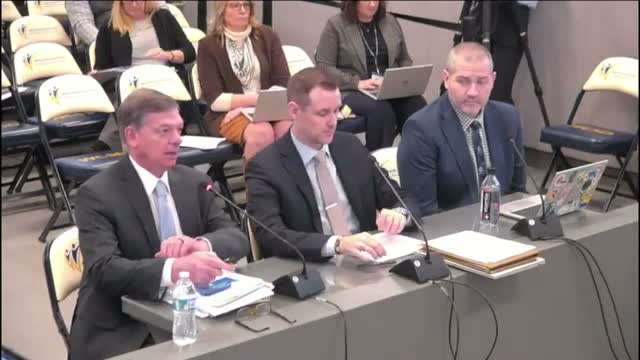
Summary
The Washoe County School District board on Jan. 27 directed the superintendent to prepare a FY2026–27 budget that does not assume enrollment impacts from Matter Academy and approved a $5,727,558 central-office reduction plan designed to close the projected deficit while protecting classroom services.
The Washoe County School District Board of Trustees voted unanimously Jan. 27 to direct the superintendent to prepare the FY2026–27 budget without assuming enrollment losses from Matter Academy and to adopt a $5,727,558 budget reduction plan focused on central-office and nonacademic savings.
The action followed a multi-hour presentation by Chief Financial Officer Mark Mathers, Deputy Chief Jeff Bozzo and Chief Human Resources Officer Doug Owen that laid out two enrollment scenarios and a tiered reduction plan. Mathers told trustees the district originally estimated an $18.4 million shortfall last fall and had already reduced that figure by $11.1 million; the remaining deficit depended largely on whether the district counted the roughly 733-student impact of Matter Academy this year. Staff said updated information and litigation-related permitting delays make Matter Academy’s opening more likely in August 2027, not August 2026, allowing the district to shift that enrollment impact to FY28.
"If we do not assume Matter Academy, the revised deficit estimate for FY27 is about $5.7 million; if we continue to assume Matter, it's closer to $8.7 million," Bozzo said during the presentation. Mathers emphasized that roughly 72% of the earlier $18.4 million estimate was attributable to low state per‑pupil funding and the remainder to enrollment declines.
The approved reduction plan concentrates cuts in central services and other nonacademic functions—where staff identified 48 positions for conversion or reduction (19 vacant, 29 currently filled), and estimated 38 employees could be affected by the bumping process. Staff repeatedly stressed the plan is intended to protect instruction: class sizes, deans, campus supervisors and police officers were not targeted for eliminations, and negotiators structured placements and bumping rules so impacted employees would not experience an immediate pay cut.
Human Resources Chief Doug Owen described a placement process that begins with open transfer windows; impacted employees were notified in advance and would be able to seek vacancies or be placed through the district’s overage and bumping procedures. "We're not talking about people being out of a position or out of a job; they remain employed and many will move to school-based roles," Owen said.
Trustees pressed staff for specifics on service-level effects. Mathers and other chiefs said some internal processing times—such as purchase-requisition turnaround and vendor payments—may slow modestly, and lower-priority HR or IT requests could take longer; urgent needs would be escalated. The plan also includes several nonpersonnel reductions and contract reviews (about $1.8 million of the savings) and proposed conversions of some contracted related‑services (PT, OT, speech, audiology) back to district positions to improve recruiting and reduce contractor costs.
Vice President Woodley moved the package and Trustee Nicolette seconded. The motion directed the superintendent to prepare the FY27 budget excluding Matter Academy enrollment impacts, approved the reduction plan with an estimated cost savings of $5,727,558, and asked staff to report back on potential new NIAA‑sanctioned sports and I‑Ready reimbursement at the next budget work session in February 2026. The motion carried unanimously.
Staff said the deletions and conversions would generally take effect after board approval and on June 30, 2026, giving employees the remainder of the school year to seek transfers or vacancies. Bozzo noted the board had previously approved vacancy and contract reviews and that many vacancies have been held or not posted to limit additional expense.
Next steps: staff will finalize a tentative FY27 budget for board review, implement the overage/transfer communications with affected associations, and return with follow-up details on sanctioned sports budgets and I‑Ready reimbursement options at the February budget work session.