Get Full Government Meeting Transcripts, Videos, & Alerts Forever!
Get email alerts on the Housing Omnibus topic
No spam. Unsubscribe anytime.
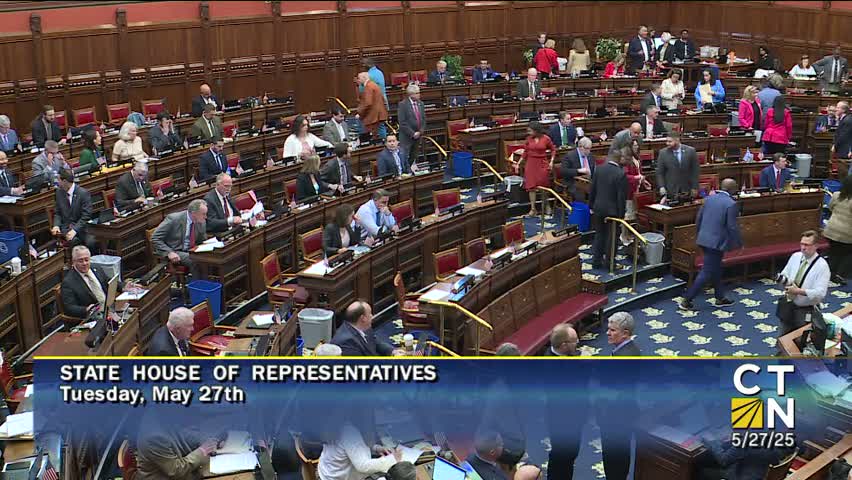
Connecticut House passes broad housing omnibus after marathon debate
Summary
After more than 11 hours of floor debate, the Connecticut House on May 27 passed House Bill 5002, an omnibus housing measure that bundles fair‑share allocations, transit‑oriented and middle‑housing changes, parking and zoning reforms, pilot homeless services and first‑time homebuyer accounts. The final vote was 84‑67.
HARTFORD — After a day and night of debate that stretched past midnight, the Connecticut House passed a major omnibus housing measure, House Bill 5002, on May 27. The bill, amended on the floor, passed by roll call, 84‑67. It bundles a range of housing measures — from a new fair‑share allocation process and transit‑oriented development incentives to pilots for homeless services and programs for first‑time homebuyers — into a single bill that supporters described as a pragmatic set of tools to address the state’s affordability crisis.
Representative Felipe, chair of the House Housing Committee, described the legislation as the product of months of committee work and stakeholder meetings and summarized the two strike‑all amendments that became the underlying bill, saying, “The following is a strike all amendment. It will become the bill.” He urged colleagues to adopt the package as a coordinated response to what the administration and advocates say is a shortage of homes across the state.
Opponents, including Representative Scott, the House housing ranking member, repeatedly criticized the measure’s size and some policy choices. In early floor remarks Scott said the package included “a 92 page amendment to a 3 page bill,” arguing the omnibus approach limited transparency and that several provisions were unrealistic for many towns. He repeatedly questioned the fair‑share methodology, changes that allow certain “as‑of‑right” conversions of commercial property to residential, and the loosened parking standards for middle‑housing, warning those changes would reduce local control and create infrastructure stress.
What the bill does - Fair share: The bill adopts a version of the allocation plan from the EcoNorthwest fair‑share study and directs municipalities to prepare priority affordable‑housing plans. The proponent said the law requires town plans (timing is staggered by municipality) and that Office of Policy and Management (OPM) will review them and may adjust allocations; proponents said the bill sets a 25% planning benchmark of the study’s numbers as this session’s target. Critics said the raw fair‑share numbers in the study are often very large for some towns and asked how towns could meet infrastructure and schooling needs.
- Transit‑oriented development and priority housing zones: The bill creates an optional pathway for municipalities to designate transit‑oriented or priority housing development districts. Municipalities that opt in can allow higher‑density or certain as‑of‑right development in the designated area and become eligible for prioritized discretionary funding for infrastructure such as sewer, sidewalks and bike facilities. Supporters said the approach is incentive‑based; opponents said it would deprioritize towns that do not opt in.
- Middle housing and parking rules: The package allows a broader range of smaller multiunit housing types (sometimes described as “middle housing”) and relaxes some minimum parking mandates for projects of 1–24 units, while requiring parking studies and local health/safety review where impacts are expected. Critics warned that relaxing mandatory parking could strain on‑street parking, school capacity and emergency services in some places; proponents said parking rules can increase costs and serve as a barrier to building more housing.
- Pilot homelessness services and cash assistance: The bill creates pilot programs, including mobile shower and laundry units for people experiencing homelessness and a demonstration that would allow vetted nonprofits to provide direct cash assistance, intended to be administered so the aid does not remove a household from housing voucher waiting lists or cause benefit cliffs. Members sought more detail on oversight, auditing and what would happen if nonprofit funding ended.
- Judicial and consumer protections: The bill clarifies pattern‑and‑practice civil enforcement authority for the attorney general and adds a statewide prohibition on certain revenue‑management software that the bill’s drafters say behaves like modern price‑fixing tools; officials noted that publicly available market reporting services (Zillow, MLS) are not banned. The judiciary chair said the measure was intended to keep state law aligned with antitrust concerns raised in recent federal and state investigations.
Floor process and amendments The floor session included many roll‑call votes on amendments and a series of late changes; several amendments seeking to change how accessory dwelling units (ADUs) are counted under 8‑30g or to strike the as‑of‑right language were defeated. A number of members pressed for more fiscal detail and for greater protections for towns with limited infrastructure; proponents said some funding and grant programs are included and that the bill is intended to be the first step in a multi‑year effort.
Vote and next steps The clerk recorded final passage of the bill as amended by House Amendments A and B, with the final roll call 84 yeas, 67 nays. The bill will be transmitted to the Senate for consideration and possible amendment. Supporters framed the measure as a practical, multi‑tool approach to a deep, systemic housing shortage; opponents said it is an overreach that reduces local control and risks unintended consequences for infrastructure, schools and neighborhoods.
What to watch next Municipal responses: Municipal planning, school and public‑safety officials will likely study the bill’s impacts on sewer, roads, parking and schools; some members said reporting and further study (including wastewater capacity) should be a near‑term priority.
Pilot programs: The mobile shower/laundry pilot and the nonprofit cash assistance demonstration include reporting and sunset elements; advocates and municipal leaders will watch how those pilots are administered and audited.
Fair‑share allocations: The EcoNorthwest report’s allocations — and how OPM reviews and adjusts municipal plans — will be central to implementation and to any future legislative fixes.
Ending: The House adjourned and will reconvene the following day; the bill moves to the Senate next for its consideration.