Get Full Government Meeting Transcripts, Videos, & Alerts Forever!
Get email alerts on the Racial Equity topic
No spam. Unsubscribe anytime.
House approves bill to create process for racial and ethnic impact statements; debate centers on scope and timing
Summary
Lawmakers approved a bill directing the Commission on Racial Equity to prepare racial and ethnic impact statements on request, setting timelines and procedures while deferring operational rule changes until after the 2027 session; opponents raised questions about record access, confidentiality and how statements would be used.
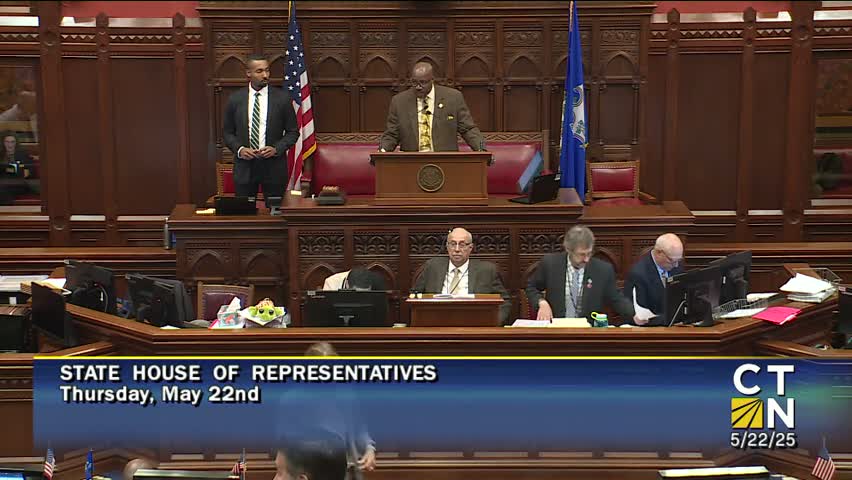
The Connecticut House approved Senate Bill 1506 on May 22, establishing a new procedure for legislators to request racial and ethnic impact statements prepared by the Commission on Racial Equity.
Representative Stastro, the bill's floor proponent, said the mechanism mirrors other legislative supports such as fiscal notes and Office of Legislative Research summaries: legislators would request a statement within 10 days of a committee's JF deadline and the commission would post prepared statements on the General Assembly website. The Senate amendment removed language that previously would have allowed broader agency record access without confidentiality limits; the restored language explicitly protects confidential records while enabling the commission to obtain public and quasi-public agency information under rules.
Members debated operational details at length. Representative Fishbein asked whether the commission had ever produced statements under earlier statutes and whether the commission would have adequate staff and processes; Representative Staffstrom and others said the previous statutory mechanism had not been used and the bill is intended to create a workable framework with realistic timelines (the bill sets a 5-day turnaround for agencies to supply requested information to the commission to support a timely statement).
Supporters said the statement would be another analytic tool for legislators alongside fiscal notes and OFA analyses; critics worried about unclear procedures, the potential cost and whether the commission or DMV/quasi-public agencies could respond quickly enough. The bill will not go into effect for operational use before the 2027 session to allow the commission and leaders to establish the joint rules and procedures.
The bill passed by roll call; members who spoke urged the commission to coordinate with OFA and agency partners to ensure timely, practicable statements once the process is implemented.