Get Full Government Meeting Transcripts, Videos, & Alerts Forever!
Get email alerts on the County Budget topic
No spam. Unsubscribe anytime.
Garrett County finance team proposes FY26 budget, recommends modest cut to property tax rate
Summary
County finance officials presented a proposed FY2026 operating budget of $103.7 million and a $13.1 million capital plan, and recommended reducing the county's real property tax rate from $1.056 to $1.02 per $100 of assessed value while warning that state education funding changes (Blueprint) will raise local costs in coming years.
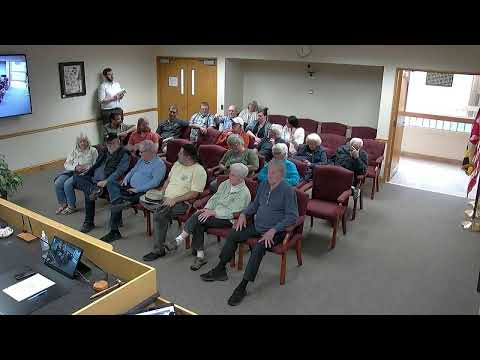
Scott Weeks, Garrett County's director of finance, presented the county's proposed fiscal 2026 operating budget of $103.7 million and a capital budget of $13.1 million during the Board of Garrett County Commissioners' May 20 public meeting.
Weeks told the board the county faced a sharp fiscal test when the governor's proposed budget showed what the finance team initially labeled a $6.3 million state effect: cuts to a disparity grant and the potential transfer of additional pension costs and state office operating costs to the county. After legislative changes, Weeks said the near-term net state effect in the county's model was about $5 million, but he cautioned the county may see additional state-driven pressures in future years.
"I'm pleased to bring forward a proposed balanced budget for your consideration," Weeks said, summarizing staff work and public engagement. He recommended reducing the real property tax rate from $1.056 per $100 to $1.02 per $100, which the presentation showed would lower property tax revenues relative to a no-change scenario by about $2.4 million while reflecting stronger projected collections in other lines.
Cody, an accountant and the county's financial analyst, walked the board through the Maryland Board of Education's Blueprint funding formula, which calculates a state-and-local total per pupil (the presentation cited a foundation per-pupil base of roughly $9,200) and apportions a local share based largely on county 'wealth' as measured by property assessments (roughly 71'73 percent of the formula) and taxable income. Cody said recent reassessments and declining enrollment can increase Garrett County's local share; he estimated roughly $2 million had shifted from the state to the county in the most recent year and forecast substantially larger increases over the coming decade if current assumptions hold.
The presentation itemized operating increases and one-time capital investments: additional costs passed through to the county for the assessment office, state-mandated courtroom security officers, two full-time ALS EMS providers, more paving miles (increasing from ~27 to 32 miles), and continued capital catch-up spending on courts, facilities and roads. Jeff Bravler, assistant director of finance, reviewed capital estimates including a courthouse elevator control replacement (roughly $107,000 to $125,000 with electrical work), courthouse dome and balcony repairs (roughly $220,000 combined), and an estimated $2.3 million to bring the purchased 2nd Street (M&T) building up to standard.
On revenue, Weeks discussed categories that allowed some conservatism to be reduced post-COVID: recordation and transfer tax receipts remain volatile but the proposed budget uses a combined $2.5 million assumption for the two lines; personal property tax includes wind and solar assets, and recent turbine upgrades were noted as driving a rise in that projection; highway user and forestry/parks allocations are state-provided estimates. Weeks said the proposed budget relies on no new use of reserves, maintains a minimum rainy-day fund (~10 percent), and proposes no income tax rate increase.
Commissioners praised the finance team and signaled preliminary support for reviewing the recommended property tax decrease before the formal adoption date. Several commissioners stressed that education funding remains the county's primary long-term challenge and that projections could change with future state actions. Members of the public asked about the county's ability to backfill potential federal grant cuts affecting community service providers; county leaders reiterated they had fully funded community action requests in the proposed budget as presented but said the county can only provide short-term help in limited circumstances.
The board set a public comment period (two weeks online) and noted the formal budget adoption is scheduled for the June 2 public meeting, giving staff time to refine numbers based on commissioner feedback and public input.
Next steps: the board invited written comments to the county finance team and scheduled formal adoption for the June 2 meeting.