Get Full Government Meeting Transcripts, Videos, & Alerts Forever!
Get email alerts on the Corrections And Reentry topic
No spam. Unsubscribe anytime.
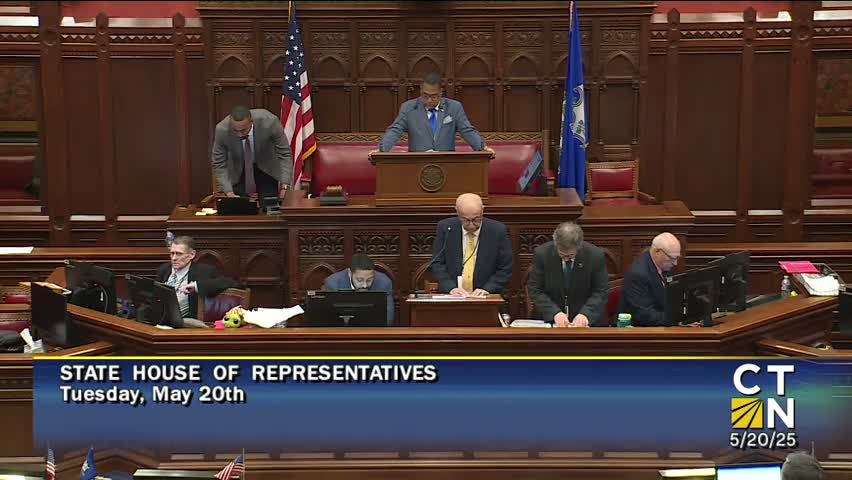
House amends and passes bill to protect residents of halfway and other state-contracted residential facilities
Summary
HB 7210, which sets discharge-plan and continuity requirements for halfway houses and similar residential facilities, passed the House after an amendment removed DMHAS from the bill to address a fiscal-note issue. Debate centered on whether facilities may be required to remain open until equivalent placements are secured.
The Connecticut House passed HB 7210 after adopting an amendment (House A) that removed the Department of Mental Health and Addiction Services (DMHAS) from the bill’s coverage to address a fiscal-note concern.
Representative Fasino, the bill’s proponent, said the amendment narrows state obligations while keeping protections for residents of residential facilities operated on behalf of the Department of Corrections and the Board of Pardons and Paroles. The original committee bill covered DMHAS-operated facilities but the floor amendment excluded those to avoid a multimillion-dollar fiscal note tied to DMHAS contract obligations.
Floor debate focused on a provision that would require a facility seeking to close to remain operational until each resident could be discharged in accordance with an individualized discharge plan or moved to an equivalent facility. Opponents raised practical concerns about the state compelling private or nonprofit operators to remain open if there is no equivalent placement available; proponents said the protection is necessary to prevent abrupt displacement of residents due to financial mismanagement or sudden contract terminations.
Representative Fishbein and others pressed how the state would identify an 'equivalent facility' and who would make that determination; proponents said the responsible agency commissioner would coordinate placements. Representative Susan Johnson and supportive members argued the rule protects vulnerable residents who could otherwise be left without a placement when a contracted provider fails.
The House adopted the amendment and passed HB 7210 as amended by roll call 100–46. The bill now proceeds to the Senate (or to the governor as required).