Get Full Government Meeting Transcripts, Videos, & Alerts Forever!
Get email alerts on the Public Health Drugs topic
No spam. Unsubscribe anytime.
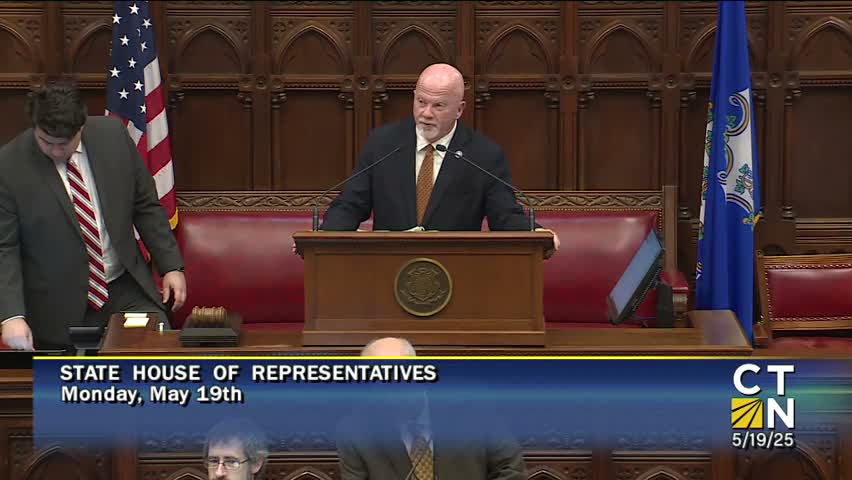
House decriminalizes small amounts of psilocybin after marathon debate on safety and enforcement
Summary
The House passed H.B. 7065 to make possession of under 0.5 ounce of psilocybin an infraction rather than an A misdemeanor. Proponents said the step recalibrates penalties and acknowledges emerging medical research; opponents warned of public-safety risks, lack of impairment testing, and insufficient numbers of drug-recognition experts.
Hartford — After hours of contentious debate, the Connecticut House voted to reduce the criminal penalty for possessing small amounts of psilocybin, the psychoactive compound in "magic mushrooms." The measure does not legalize sale, production or use for driving while impaired.
Representative Tom- something Staffstrom (House Judiciary) introduced the bill as a recalibration of penalties: possession under one-half ounce would become an infraction with a civil fine and mandatory destruction of seized contraband rather than an A misdemeanor punishable by up to a year in jail. "This bill does not legalize psilocybin," Staffstrom said. "It does not allow folks to drive under the influence. It reduces the penalty for small-amount possession."
Opponents pressed public-safety concerns. Representative Fishbein and others argued that the state does not yet have reliable roadside testing to detect psilocybin impairment and that Connecticut lacks sufficient Drug Recognition Experts (DREs) to prosecute nonalcohol impairment. On the floor a number of members noted that Connecticut currently has only a few dozen certified DREs while municipalities number in the hundreds, and urged delay for study and training.
Representative Howard offered an emergency amendment to appropriate $1 million for training and retention of DREs; members debated whether attaching an appropriation would procedurally force the bill to appropriations and delay floor action. Multiple other amendments to create working groups or instruct state police to study testing approaches were debated and voted down. Representative Fishbein proposed raising fines to create a stronger deterrent; that proposal was defeated.
In the final recorded roll call the bill passed with a narrow margin: 74 yeas, 65 nays and 12 absent. Supporters said the change brings the legal treatment of psilocybin closer to an evidence-based assessment of relative harms and would reduce collateral criminal penalties for low-level possession; opponents said it risks increasing unregulated consumption before medical protocols and federal approvals are fully developed.
What's next: The bill now proceeds along the legislative process toward the Senate for consideration and potential reconciliation. Proponents and opponents both said they expect additional follow-up: supporters for studying medical pathways, and opponents for strengthening enforcement tools if the law changes.