Get Full Government Meeting Transcripts, Videos, & Alerts Forever!
Get email alerts on the Housing Policy topic
No spam. Unsubscribe anytime.
House passes ban on municipal temporary bans of duplexes and multifamily housing after hours of debate
Summary
The House approved HB 7035 to prohibit municipalities from imposing temporary moratoria on duplexes and multifamily housing, amid extensive debate on local control, environment, schools and public safety. The bill passed as amended by a 94–54 vote.
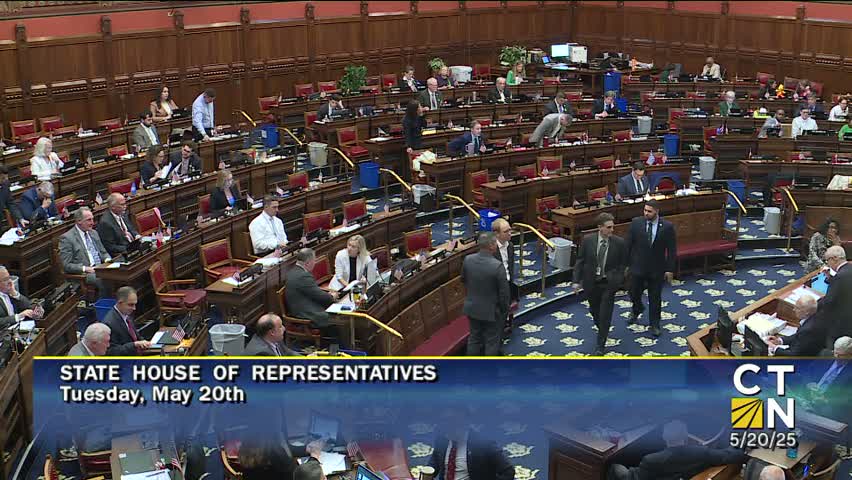
The Connecticut House on the floor Tuesday passed a bill that bars municipalities from enacting temporary bans on duplexes and multifamily housing, setting off heated debate over local control, infrastructure and housing policy.
Representative Hugh Felipe, the bill’s sponsor, said the measure is intended to halt a pattern in some towns of repeatedly renewing short-term moratoria that become de facto long-term bans. “We saw a practice where temporary bans were extended repeatedly,” Felipe said. “This statute will preserve municipalities’ ability to decide individual projects while preventing indefinite freezes on the supply of middle housing.”
Supporters argued the bill helps increase “middle housing” (duplexes and buildings with three or more units) and frees up housing options for retirees, working families and others. Representative Godfrey, who supported the bill, said allowing smaller multifamily units to proceed could free single-family homes back into the market for younger buyers.
Opponents said the bill undermines local zoning authority and ignores locality-specific constraints such as sewage capacity, water availability, wetlands and school capacity. Representative Corpus said the bill is a “blunt instrument” that sacrifices environmental and local planning concerns in favor of a statewide rule. Several members asked whether a town with infrastructure problems should be allowed a temporary moratorium while it addresses sewer, road or public-safety shortages; proponents responded that denials on case-by-case public-safety or infrastructure grounds would remain available.
Multiple amendment proposals were debated on the floor, including an amendment to allow temporary moratoria in riparian or other environmentally sensitive areas and a proposed carve-out to permit temporary bans for public-safety reasons. Both amendment attempts failed on the floor. Proponents of the public-safety carve-out said it was necessary to protect small towns that rely on volunteer fire and EMS services; supporters of the original bill said case-by-case denials already allow municipalities to refuse projects that would create a safety hazard.
The House voted to pass the bill as amended. The final roll-call tally on the floor was 94 in favor, 54 opposed, with 3 members absent.
What’s next: The bill now moves to the governor for signature or other executive action. If signed, municipalities would retain authority to evaluate and deny individual projects for valid local reasons, but would be barred from implementing temporary, across-the-board moratoria on duplexes and multifamily housing that broadly freeze development.