Get Full Government Meeting Transcripts, Videos, & Alerts Forever!
Get email alerts on the State Budget topic
No spam. Unsubscribe anytime.
House advances deficiency bill after heated budget debate; governor declares Medicaid emergency
Summary
The Connecticut House passed a FY2025 deficiency package after hours of debate over a roughly $555 million shortfall, including a $284 million Medicaid gap the governor characterized as "extraordinary circumstances." Lawmakers pressed for details on pharmacy and corrections overruns as the Appropriations chair outlined a mix of lapses, federal reimbursements and reserves to cover the gap.
Hartford — The Connecticut House on May 21 passed a deficiency appropriations package to close a multihundred-million-dollar shortfall in the current fiscal year after protracted floor debate about what is driving the gap.
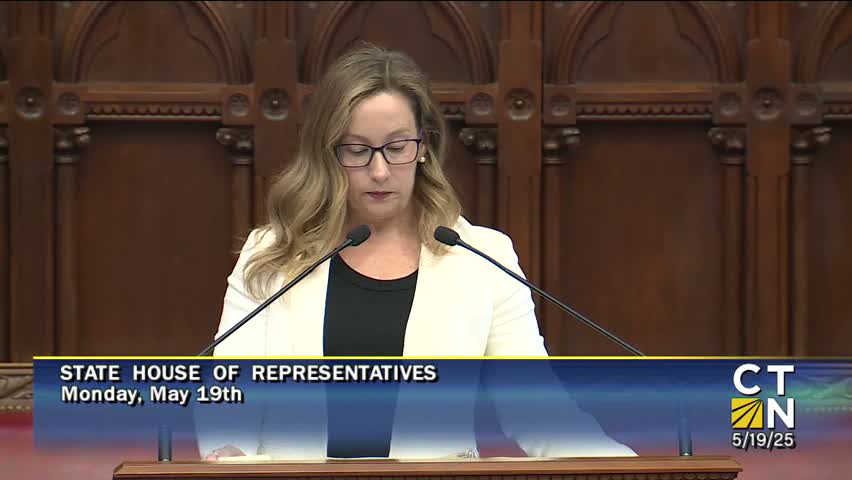
Representative Toni Walker, chair of the Appropriations Committee, told colleagues the proposal is intended to address approximately $555 million in projected deficiencies through a mix of identified lapses, operational revenues and the governors emergency declaration for Medicaid. Walker said the pharmacy prescription drug line accounted for about $90 million of the current shortfall and that Medicaid represented the largest single driver of the gap.
"Medicaid is the program by which we pay for the medical bills of those that are needy," Walker said on the floor, laying out the programs breadth and some of the categories that have grown faster than budgeted.
Members pressed the Appropriations chair for specifics. Representative Nuccio repeatedly challenged the decision to hold roughly $186 million in unallocated lapses in reserve and questioned why more lapsed dollars were not used now. Walker and other proponents said the plan leaves a prudent buffer for late-emerging obligations and federal funding changes while deploying identified lapse dollars and a $284 million appropriation to cover the Medicaid deficiency.
Representative Nuccio warned that failure to act earlier left the chamber with a larger problem now: "We didn't open the budget last year," he said, adding that increased overtime in corrections and personnel overruns in multiple agencies contributed to the overruns.
Governor Ned Lamont submitted a statutory declaration that the Medicaid shortfall constituted "extraordinary circumstances" necessitating expenditures beyond the states constitutional expenditure cap. The governors declaration, read into the record, said the Medicaid deficiency—projected at roughly $284 million—threatened timely provider payments and federal funding, and that unappropriated general-fund resources (projected surplus exceeding $450 million) could cover at least part of the gap.
Lawmakers also discussed related provisions the majority added to the package, including workers' compensation clarifications tied to a recent Connecticut Supreme Court decision; proponents said those changes were necessary to prevent a spike in premiums and future costs to municipalities.
The package was approved on the floor with the necessary procedural steps and will be transmitted for further process; lawmakers signaled there will be additional review of remaining lapses before fiscal-year end. Representative Walker said the package is meant to keep state operations funded to June 30 while leaving room to respond to end-of-year adjustments.
What's next: The deficiency bill will be transmitted per legislative procedure; agencies will continue reporting updated outturns and the administration and GAO offices are expected to refine final numbers ahead of the June 30 fiscal-year end.