Get Full Government Meeting Transcripts, Videos, & Alerts Forever!
Get email alerts on the Dam And Construction topic
No spam. Unsubscribe anytime.
Dam-safety, river access and construction phasing are central concerns in Burlington Street Bridge planning
Summary
Consultants proposed dam-safing steps, enhanced river access, possible fish/small-boat passage and recreational features, and warned construction will be disruptive with phasing options ranging from biweekly night closures to summer-critical or full closure to shorten schedules.
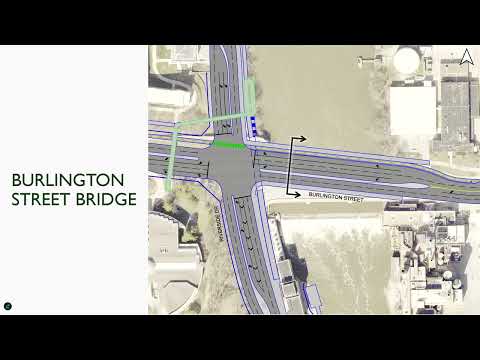
Project presenters described a range of Burlington Street dam alternatives and outlined expected construction impacts and detour constraints.
Mike said at minimum dam alternatives would "enhance" river-recovery access and noted options that may be advanced include dam-safing steps to reduce hazards at the existing roller dam, variable riverside access, fish or small-boat passages, swim/wade access, and whitewater or tubing features. He emphasized these recreation and safety features can be mixed and matched or omitted as the team advances alternatives.
On construction phasing, Mike warned "construction is not gonna be fun. It's gonna be, very disruptive." He described three phasing approaches: keep the bridge open with limited biweekly night closures for material deliveries; summer-critical closures that "can shave about a year off that construction timeline"; or full closure, which is the most disruptive but can shorten schedule further. He also highlighted detour constraints: the Iowa Avenue detour has rail-bridge height restrictions and Benton Street should not be closed while an Iowa DOT bridge project there is underway.
The team said phasing and detour constraints will factor into the technical advisory committee’s decision on a preferred alternative and asked the public to weigh in through the survey and in-person boards.