Get Full Government Meeting Transcripts, Videos, & Alerts Forever!
Get email alerts on the Poverty Policy topic
No spam. Unsubscribe anytime.
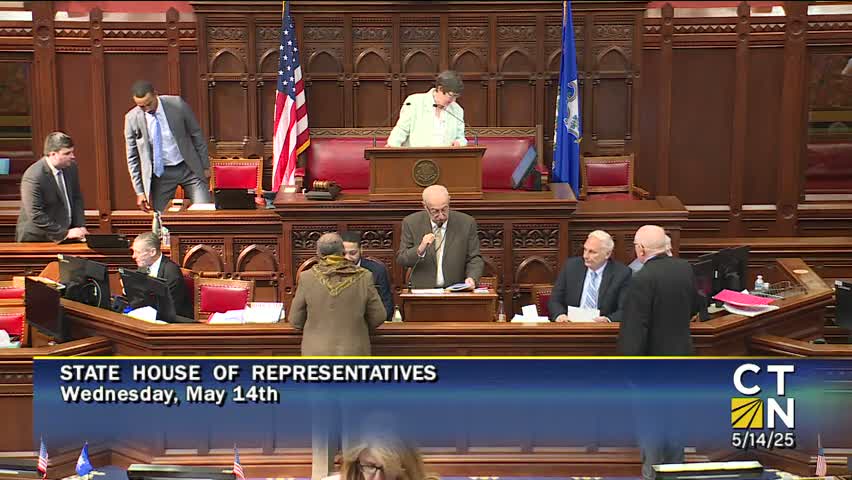
Connecticut House approves working group to study poverty amid heated UBI debate
Summary
The House passed HB 6841 to create a working group to study methods to reduce poverty. Floor debate focused heavily on universal basic income (UBI), benefits‑cliff concerns and whether targeted programs or broad cash transfers are preferable.
The House approved HB 6841, which creates a bipartisan working group to study systemic barriers to economic mobility and recommend policies to reduce poverty. Representative Parris, sponsor of the measure, said the group would examine options ranging from workforce training to targeted supports and described the effort as a ‘‘long‑term strategy’’ to address racial and regional disparities in poverty.
The bill prompted an extended floor debate that repeatedly returned to universal basic income (UBI). Supporters said a working group was a prudent, evidence‑driven step to evaluate all potential approaches, citing prior state experiments and the need to coordinate fragmented programs. Representative Kite called the bill ‘‘a deep dive’’ into causes of poverty and urged passage. Representative Mastro Francesco and other members warned that exploring UBI could amount to proposing perpetual welfare; he described the term as ‘‘frightening’’ and said he would oppose the measure.
Proponents said the working group will not itself create new benefits, but will collect data, study the benefits cliff, and propose evidence‑based reforms. Representative Perez, the bill proponent, told colleagues the aim was coordination, not immediate adoption of sweeping changes; he underscored participation from agency experts and subject‑matter stakeholders.
Procedural outcome: The House passed the measure by roll call. Floor tally recorded: ayes 110, nays 37, absent/not voting 4. The working group will be convened to issue recommendations by the schedule set in the bill; members asked for ongoing committee engagement to address any implementation complications.
Ending: The bill passed after prolonged floor debate that reflected deep philosophical differences about anti‑poverty policy. Supporters called for federal and state coordination; opponents warned against unintended incentives and urged job‑creation approaches.