Get Full Government Meeting Transcripts, Videos, & Alerts Forever!
Get email alerts on the Social Media And Children topic
No spam. Unsubscribe anytime.
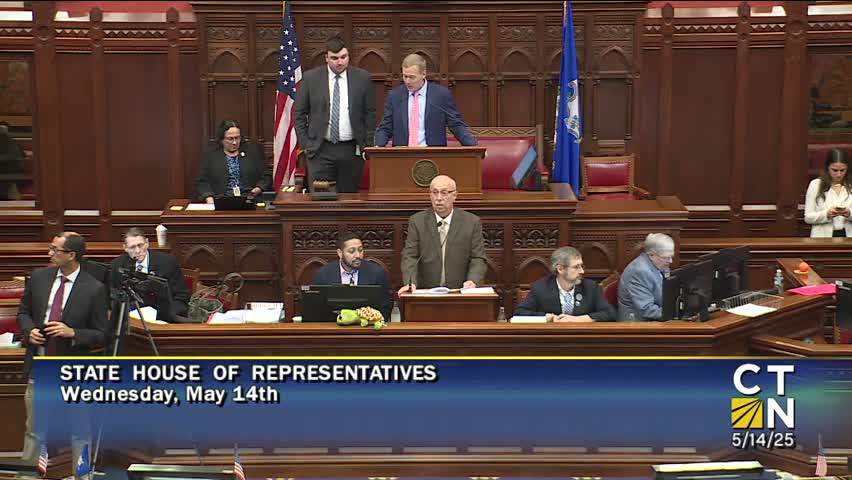
Connecticut House passes bill restricting algorithmic targeting of minors on social media
Summary
The House adopted a strike‑all amendment and passed HB 6857, which bars covered platforms from using personalized algorithms to target minors without parental consent; the measure sets default limits on notifications and daily algorithmic exposure and exempts certain streaming and educational services.
Representative Turco, vice chairman of the General Law Committee, summarized a strike‑all amendment to House Bill 6857 that the chamber adopted before voting the measure out of the House. The amendment and bill prohibit covered platforms from using personalized algorithms to target individuals under 18 without parental consent, require platforms to use commercially reasonable age‑verification methods, and establish default protections that parents may relax. “What this bill is just prohibiting without parental consent is the targeting of minors with content using those algorithms,” Representative Turco said while summarizing the amendment.
The measure sets default settings for covered accounts: algorithmic notifications based on personal data may be sent only between 8 a.m. and 9 p.m., exposure to algorithmically prioritized content is limited by default to one hour per day, and a minor’s account defaults to allow only contacts the minor knows. Platforms are allowed to continue to host searchable content and to provide non‑personalized feeds; parents may opt in or make the protections stricter for their child.
Supporters framed the bill as a public‑health intervention. Representative Carpino said the legislation ‘‘protects our kids, and re‑engages families’’ and pointed to research linking addictive platform features with harms to adolescents’ mental health. Several speakers described constituent testimony, school‑based examples, and medical or attorney‑general support during committee work.
Opponents raised enforceability and civil‑liberties questions. Representative Master Francesco and others warned the bill could impose difficult technical burdens on platforms, pose First Amendment challenges, and be hard for a small state to enforce. ‘‘I find this bill to be … unconstitutional and an infringement on rights,’’ one member said during floor debate, reflecting concerns aired about federal preemption and practical verification methods.
The bill includes exemptions and clarifications: platforms that do not rely primarily on user‑generated and user‑shared media for their core service (for example, many streaming services and marketplaces) were carved out; educational platforms used exclusively by schools are also excluded. Enforcement is framed as an unfair or deceptive trade practice under Connecticut law; the bill authorizes the state’s consumer protection mechanisms to investigate and pursue violations.
Procedural outcome: the House adopted the strike‑all amendment by voice and passed HB 6857 as amended. Roll‑call tallies recorded on the floor were: ayes 121, nays 26, absent/not voting 4. The next steps are enrollment and transmission to the Senate for concurrence or further consideration.
What happens next: If enacted, the law would require platforms to build age‑verification options and parental controls that conform to the statute’s ‘‘commercially reasonable and technologically feasible’’ standard; implementation details and enforcement will fall to existing consumer‑protection authorities.
Ending: The bill passed the House after more than two hours of floor debate; proponents said it rebalances parental control and platform defaults, while opponents said the changes raise unresolved technical and constitutional questions.