Get Full Government Meeting Transcripts, Videos, & Alerts Forever!
Get email alerts on the Elections topic
No spam. Unsubscribe anytime.
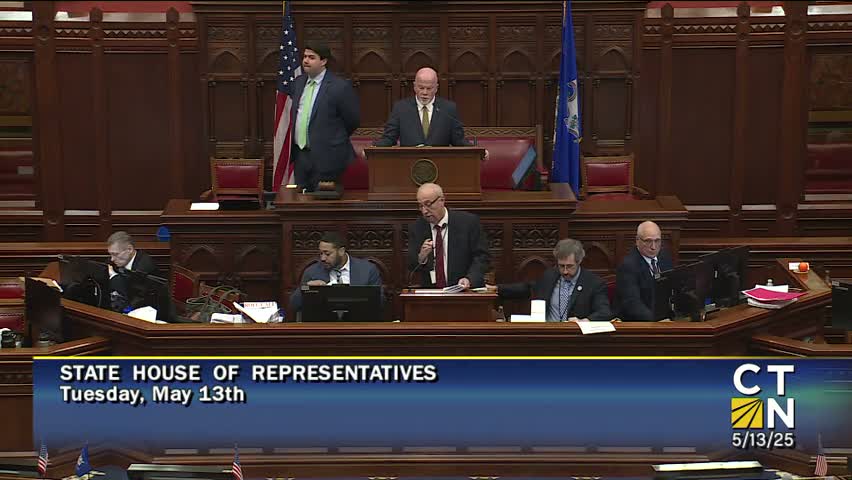
House creates task force to study voter participation and allows municipal pilot programs; bill draws heated debate
Summary
HB 7242 establishes a task force to study ways to increase voter participation (including examining compulsory-voting models abroad) and authorizes municipal pilot programs within existing law and appropriations; opponents warned the bill\'s stated aspiration of 100% participation raised concerns about compulsory measures, but the bill passed as amended.
The House voted to create a study task force on voter participation and to authorize municipal pilot programs to promote turnout under existing law (HB 7242). The proposal, introduced by Representative Blumenthal, prompted an extended and at times contentious floor debate over the scope and goals of the task force, including language that references a 100% participation aspirational goal.
Blumenthal said the measure will investigate practices both domestic and international that can increase civic engagement and would allow municipalities — within existing statutory limits and budgets — to run pilot programs to improve turnout. He emphasized limitations: "That is not permitted under our laws" for towns to require voting or to use partisan advocacy; the bill does not authorize mandatory voting or new authorities beyond current law.
Opponents pressed multiple concerns. Representative Mastro Francesco sought to strike Section 2 (which highlighted municipal pilot programs) arguing it could open the door to unsolicited mass mailings of absentee-ballot applications and possible ballot-harvesting risks; his amendment to remove the pilot-program authorization was defeated on the floor. Several members argued the bill\'s language and the composition of the proposed task force required clearer bipartisan balance and tighter guardrails.
Supporters said Connecticut ranks well below perfect turnout and that a task force could recommend practical ways to increase civic engagement — from civic education to resource and process improvements — without coercion. Representative Santiago noted Connecticut's turnout figures (67% in the 2024 presidential election, 48% in midterms) and described the task force as a vehicle to explore reforms to boost public participation.
The bill, as amended on the floor, passed after roll-call. Lawmakers said the task force will report back with findings and proposals; any municipal pilots must operate within existing statutes and appropriations.
Ending: The task force will convene to study turnout strategies and report recommendations; measures that would alter absentee-ballot eligibility or mandate voting would require separate, explicit statutory changes.