Get Full Government Meeting Transcripts, Videos, & Alerts Forever!
Get email alerts on the Education topic
No spam. Unsubscribe anytime.
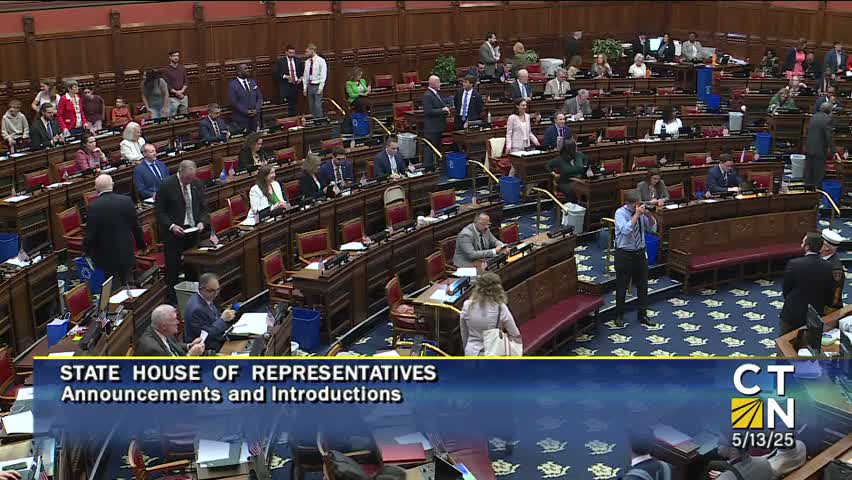
Connecticut House passes sweeping education omnibus establishing civics seal and changing kindergarten waiver rules
Summary
The House approved a 30-section education omnibus (HB 7009) that creates a Connecticut seal of civics education for diplomas, requires public reporting of multilingual-learner data, pushes out some deadlines and phases out kindergarten waivers by 2027; the bill passed 128–20 after amendment.
The Connecticut House on a roll vote passed HB 7009, a 30-section education omnibus that includes the creation of a Connecticut state seal of civics education and engagement and a host of technical and policy changes to school operations. The bill passed as amended 128–20, with three members absent.
Representative Leeper, chairing the discussion, said the civics seal is intended to "recognize the contributions of our high school students who are doing exemplary work in civics education and in civics engagement in their communities." She described the measure as voluntary, telling colleagues: "This is not a mandate. This is not required of our districts. This is an opportunity that districts can take advantage of if they choose."
The bill bundles earlier measures on multilingual-learner reporting, device policies in schools, kindergarten start-age waivers, updates to school nurse forms and crisis-response drills. On multilingual learners, Leeper said the data are already collected by the State Department of Education and the new language will make that information more public and updated annually.
One of the most contested provisions changes the availability of waivers that allow children younger than five to enter kindergarten. Republican Representative Romano warned that the change will impose local costs, saying Shelton "had 88 kids that used that waiver" and that holding them in Pre-K could have "cost us probably around 1000000 dollars in our district." Leeper responded that the provision phases out waivers over three years to give families and districts time to plan and coincides with proposals to expand preschool capacity.
The bill also requires local and regional boards to adopt smart-device policies using guidance from the State Department of Education, but Leeper emphasized districts retain flexibility to craft policies that fit local needs. Other sections add standardization for crisis-response drills, require same-day notification to families after restraint or seclusion incidents, clarify MOUs for school resource officers, and strengthen budget transparency for boards of education.
Supporters argued the package balances safety, transparency and local control while advancing civic engagement; opponents raised concerns about local fiscal impacts and process. After extended debate and the adoption of House Amendment A (LCO 8094), the House voted to pass the bill.