Get Full Government Meeting Transcripts, Videos, & Alerts Forever!
Get email alerts on the Appointments Pardons Paroles topic
No spam. Unsubscribe anytime.
House confirms two nominees to Board of Pardons and Paroles after debate over statutory diversity
Summary
The House adopted two confirmations for the Board of Pardons and Paroles (Eileen Keyes and Alex Sarkoff/Harkoff). Floor debate focused on whether the governor's appointments complied with statutory diversity requirements (C.G.S. §4–9b); proponents stressed qualifications, opponents cited statutory composition concerns.
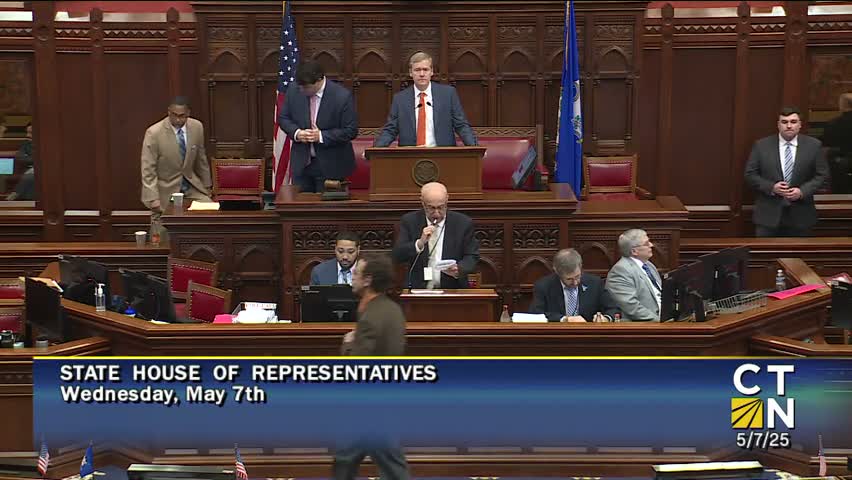
HARTFORD — The Connecticut House on the floor confirmed two nominees to the Board of Pardons and Paroles following debate about the statute that guides appointment diversity.
The chamber adopted House Joint Resolution 96 confirming Eileen K. Keyes of Farmington after a floor exchange that focused on whether the appointments would comply with Connecticut General Statutes §4‑9b, which asks that appointed boards reflect gender and racial diversity. Ranking Member Representative Fishbein said appointing two additional white individuals would leave the board without any black males and urged adherence to the statutory guidance; he said he intended to vote no. Committee chair Representative Staschmann (chair of Judiciary) and other supporters underscored Keyes’s qualifications (UConn undergraduate, University of New Haven master’s in forensic science, municipal policy experience) and urged confirmation.
The resolution passed on a roll-call vote after the debate.
Later the body considered House Joint Resolution 95, confirming Alex Sarkoff (also referred to on the floor as Alex Harkoff) of Hartford. Representative Godfrey spoke in support, tracing Sarkoff’s career from intern to executive director of the Connecticut Sentencing Commission and citing his legal and policy background. Again, Representative Fishbein raised statutory diversity concerns and opposed the appointment. The resolution was adopted by the House on a roll‑call vote.
What happened on the floor: Both nominations were favorably reported from committee and then debated on the floor. Supporters emphasized professional qualifications and public‑service experience; opponents focused on the composition of the Board of Pardons and Paroles and adherence to the statute’s diversity expectations. Clerk announcements record both resolutions as adopted.
What’s next: With House adoption, both confirmations proceed per normal appointment process for the Board of Pardons and Paroles.