Get Full Government Meeting Transcripts, Videos, & Alerts Forever!
Get email alerts on the Labor Warehousing topic
No spam. Unsubscribe anytime.
Connecticut House approves limits on quotas for large warehouse distribution centers after heated debate
Summary
The House passed HB 6907 (97–48), requiring warehouse employers with 100+ employees at a site to disclose quotas and preserve certain work‑speed records, bar quotas that interfere with meal or bathroom breaks, and give employees access to performance data; enforcement and a private right of action drew sustained floor debate.
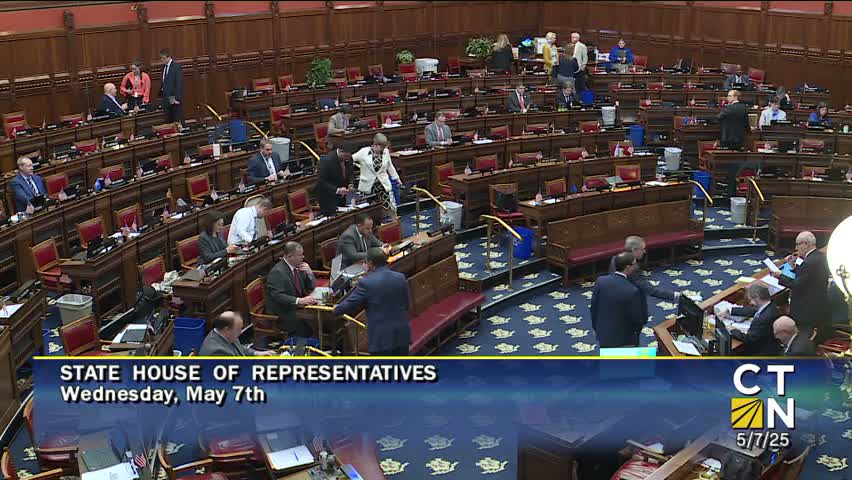
HARTFORD — The Connecticut House on the floor passed House Bill 6907, aimed at increasing transparency around workplace quotas at large warehouse distribution centers, after several hours of debate and a series of failed amendments. The bill passed by a 97–48 roll-call vote.
The measure requires employers at a single warehouse with 100 or more employees (or 1,000 or more statewide across sites) that use quotas to provide each employee a written description of any quota, retain work‑speed records for three years from the date of hire and provide employees access to their personal and aggregated work‑speed data. The bill also forbids quotas that would interfere with legally required meal periods or bathroom breaks and includes civil remedies that can involve the attorney general.
Representative Bobby Sanchez, the bill’s sponsor, said the aim is transparency and worker access to the information that affects employment decisions. "The intent of this bill is to ensure warehouse workers in our state are informed of any required quotas that they have," Sanchez told colleagues on the floor.
Opponents repeatedly said the measure was written in a way that singled out large operators such as Amazon and risked unintended consequences for the state’s business climate. "Make no mistake — this is the Amazon bill," Ranking Member Representative Weir said during the floor exchange, arguing the large-company focus and NAICS‑code carveouts make the legislation uneven.
A string of floor amendments sought to change enforcement from a private civil route and intervention by the attorney general to handling complaints through the Labor Commissioner, or to postpone enactment while a task force studied the issue. Representative Weir offered three major amendments: one would have removed the attorney general’s immediate civil enforcement authority and sent complaints to the Labor Commissioner; another would have created a study task force. Each of those amendments was debated and then defeated on roll-call votes.
Supporters of the underlying bill, including labor advocates who submitted written testimony to committees, said the measure addresses worker safety and fairness where automated monitoring and quotas are in use. Supporters pointed to rising industry injury statistics and said clearer notice and recordkeeping will help employees and courts evaluate alleged retaliation.
Opponents cautioned that the bill duplicates existing statutory protections for meal breaks and could expose the state and private parties to litigation costs; members repeatedly asked whether the attorney general’s office had testified or whether a fiscal note covered potential litigation expenses. Representative Weir and others also warned that strict recordkeeping and potential civil penalties could disadvantage small operators or encourage automation.
Key provisions and dates discussed on the floor include a statutory effective date (the bill text discussed effective 10/01/2025 and specific compliance rules on or after 07/01/2026). The floor debate also clarified that the bill’s record‑retention requirement runs three years from date of hire.
The bill’s passage followed a lengthy section‑by‑section exchange about definitions ("quota," "work‑speed data," who counts as an employee and whether drivers or couriers are excluded), NAICS industry code boundaries that determine coverage, what "as soon as practicable" means when quotas change (Sponsor referred to a two‑business‑day standard on the floor), the 90‑day rebuttable‑presumption rule for adverse actions after a data request, and who may recover attorney’s fees in civil actions.
After the final roll call, House leaders announced other, unrelated measures that also passed, and sent the warehouse bill along the legislative process as required. The bill text retained the attorney general enforcement mechanism rather than shifting jurisdiction to the Labor Commissioner, per the failed floor amendments.
What’s next: With the House passage, the bill proceeds in the legislative process toward enrollment and the governor’s desk, subject to the legislature’s remaining steps and any companion action in the Senate.