Get Full Government Meeting Transcripts, Videos, & Alerts Forever!
Get email alerts on the Earned Wage Access topic
No spam. Unsubscribe anytime.
Connecticut moves to regulate earned‑wage access apps: $4 per‑advance cap, $30 monthly cap, licensing and anti‑stacking rules
Summary
The House passed a Banking Committee bill to license earned‑wage access providers as small‑loan lenders, impose a $4 per‑advance cap and a $30 monthly cap on finance charges, require data reporting to the Department of Banking and prohibit certain collection practices; supporters called it the nation's strongest set of consumer protections for the product.
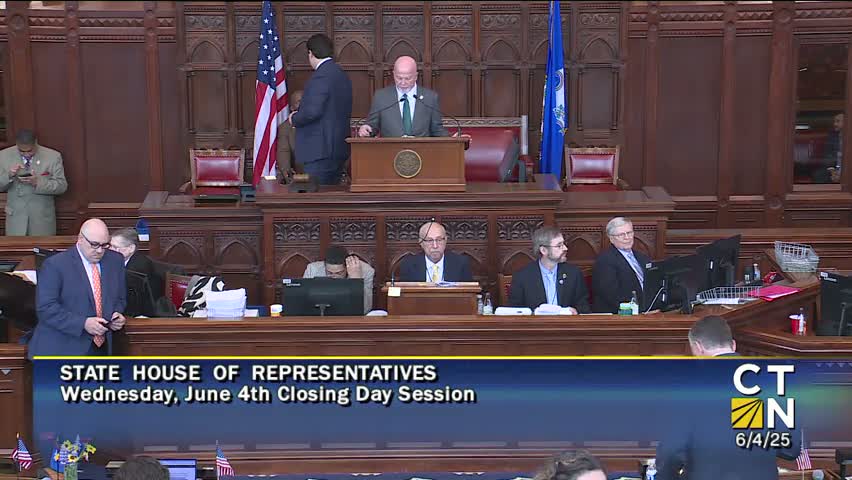
The Connecticut House on Wednesday approved a bipartisan package to regulate earned‑wage access (EWA) providers, the fintech apps that let employees obtain part of a forthcoming paycheck in advance. The measure licenses EWA providers under the state’s small‑loan framework, sets consumer safeguards and imposes limits intended to prevent high‑cost or predatory uses of the product.
Representative Mark Doucette, chair of the Banking Committee, described the bill as a negotiated compromise among providers, consumer advocates and regulators. The bill requires licensing, caps fees for EWA at $4 per advance with a $30 monthly cap, and includes anti‑stacking measures (data reporting at least twice a year so the Department of Banking can identify Connecticut borrowers taking multiple advances across providers).
“By adopting this legislation we would be codifying the fact that it is non‑recourse,” Doucette said on the House floor, referring to the industry’s representation that the product is not subject to traditional collections. He added that the bill codifies consumer protections including the right to cancel and prohibitions on collection harassment.
Debate touched on several contentious points. Some lawmakers said the caps amount to high effective APRs on very small advances and urged caution; others said the caps are among the strongest consumer protections enacted nationally. Representative Retigliano argued the APR equivalent could still be substantial on small advances and pressed sponsors on enforcement, voluntary “tips” and whether subscription models could circumvent the caps. Supporters said the fee caps were necessary because APR calculations for short‑term advances can produce very large annualized rates and that a finance‑cap approach is the most practical consumer protection for these products.
Key provisions passed into law include licensing, mandatory data reporting to the Department of Banking to detect overuse, a prohibition on certain aggressive collections and limits on tips/voluntary finance charges (these must be disclosed and counted towards the finance charge calculation). Speakers promised continued monitoring.
Where it goes next: The bill passed the House in concurrence with the Senate and is headed to final transmittal. The Department of Banking will implement licensing and reporting rules and should produce guidance for providers on compliance.
Speakers quoted (from House proceedings): "It is a loan." — Representative M. Doucette "A consumer should be able to cancel at any time." — Representative M. Doucette
Status: Passed House in concurrence with Senate.