Get Full Government Meeting Transcripts, Videos, & Alerts Forever!
Get email alerts on the Cannabis Regulation topic
No spam. Unsubscribe anytime.
House passes HB 7181 to tighten enforcement, adjust potency limits and expand oversight for cannabis market
Summary
The House adopted HB 7181 after a lengthy floor discussion and amendment. The bill creates a cannabis control division at DCP, increases penalties for illegal sales at smoke shops, adjusts pharmacist availability rules, raises certain THC limits with health warnings, and includes provisions to help social equity cultivators operate outside DIAs.
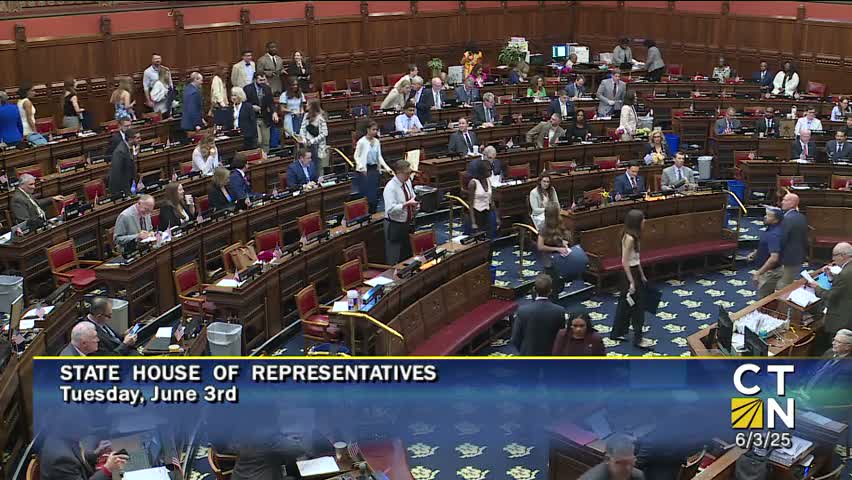
The Connecticut House on June 3 passed House Bill 7181 as amended, a sweeping package aimed at tightening enforcement of cannabis, hemp and tobacco laws while adjusting regulatory rules for the commercial market. Representative William Lamar, chair of the General Law Committee, summarized the measure on the floor, saying it “establishes a cannabis control division with the Department of Consumer Protection.”
Lamar told colleagues the bill has several goals: bolster enforcement against illegal sales in smoke shops and convenience outlets, shore up the medical marijuana market, and preserve social‑equity goals in the adult‑use rollout. He described new enforcement tools and penalties: the measure increases fines for unlicensed dealers and raises penalties targeting retailers that sell to under‑21 buyers, and authorizes a multi‑agency enforcement board made up of state legal and public‑health officials to coordinate responses to illegal products.
The bill also changes operational rules for licensed retailers and cultivators. Lamar described a new pharmacist requirement for hybrid retail operations — pharmacists must be available at least eight consecutive hours a week and accessible via telehealth — replacing prior language that effectively required pharmacists on site at all hours. The legislation permits certain social‑equity cultivators to operate off‑site outside designated impacted areas (DIAs) under conditions intended to protect workforce and community benefits; it requires workforce plans and transportation assistance to ensure employees from DIAs can reach off‑site facilities.
On product standards, the bill raises potency thresholds for some products — cannabis flower from 30% to 35% THC and non‑flower products from 60% to 70% — while requiring clearer high‑THC warnings and consumer information on health risks. Lamar said these changes align Connecticut with other states and include labeling and consumer‑education safeguards.
Opponents raised concerns about potency increases and the risk of unregulated products in retail channels. Representative Lucigliano noted the bill was an attempt to “keep a check on the marketplace” while Representative Titliano and others pressed for clarity on enforcement scope and protections for youth. The House adopted an amendment and, after a roll‑call vote, passed the bill. The clerk announced the final tally: 116 Yeas, 22 Nays, 13 Absent; the bill passed as amended and was transmitted to the Senate.
The measure combines enforcement, industry relief and consumer‑safety measures and directs state agencies to write implementing regulations. Its immediate effect will be to change licensing and compliance duties for retailers, cultivators and the Department of Consumer Protection; further, several provisions require rulemaking and administrative implementation before all changes take effect.