Get Full Government Meeting Transcripts, Videos, & Alerts Forever!
Get email alerts on the Budget topic
No spam. Unsubscribe anytime.
House approves up to $500 million set‑aside to backfill federal cuts to food, housing and related programs
Summary
Lawmakers set aside up to $500 million of volatile revenue in the budget reserve fund to be available for backfilling federal shortfalls in SNAP, WIC, LIHEAP, school meals, child care, housing assistance and certain health programs; the funds would be subject to governor/OPM recommendation with legislative oversight and expire into the pension system if unspent.
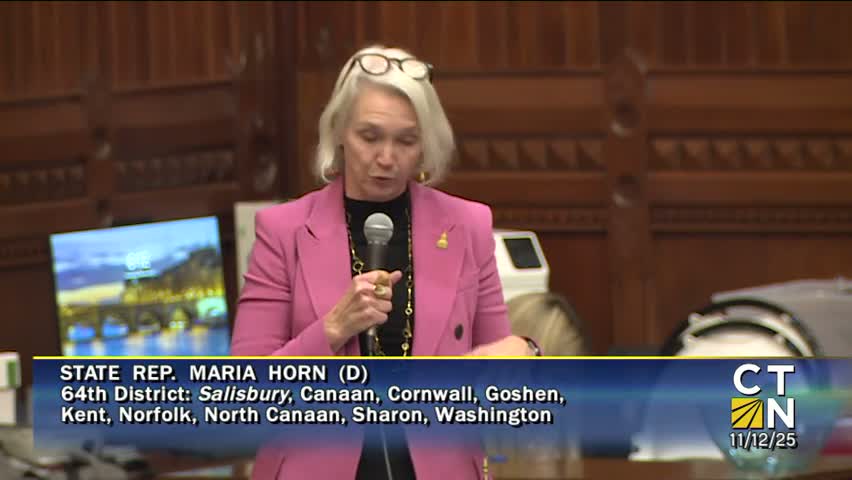
The Connecticut House voted to hold up to $500 million in excess state revenue in the budget reserve fund to guard against reductions in federal benefits and programs, adopting emergency-certified HB 8003 during the Nov. 12 special session. Sponsors framed the measure as a temporary, targeted backstop for households that rely on federal nutrition, housing and related programs and said legislative leaders would retain the right to disapprove any proposed use.
Under the measure, excess 'volatile' revenue above the statutory budget reserve cap would be set aside; if the governor and OPM identify an actual federal action or inaction that cuts funding for eligible categories (including SNAP, WIC, LIHEAP, school meals, child care, housing assistance and certain healthcare funds), OPM may recommend a targeted appropriation to fill the gap. Six legislative leaders would then have 24 hours to disapprove the spend; absent a disapproval the appropriation may proceed. Money left unused by 30 June 2026 would flow into the state pension system.
Supporters said Connecticut’s strong revenue position allowed the state to protect families and providers quickly without waiting for federal relief. Critics warned that diverting revenue from long‑term pension paydown risks future obligations; proponents said the set‑aside and the expiration rule balance the near‑term need with fiscal responsibility.
The bill passed after extended floor discussion about the scope, triggers and oversight process. Lawmakers asked for regular reporting and close executive‑legislative coordination on any deployments of the funds.