Get Full Government Meeting Transcripts, Videos, & Alerts Forever!
Get email alerts on the Housing topic
No spam. Unsubscribe anytime.
Connecticut House passes major housing-growth package after hours of debate
Summary
The Connecticut House approved emergency-certified HB 8002, a 104‑page housing-growth package that creates municipal 'housing growth plans,' expands council-of-government roles and includes measures on parking, 'priority housing development zones,' fair-rent commissions and a state housing authority provision that drew sharp criticism. Sponsors said it advances infrastructure and affordable-housing tools; opponents warned of lost local control and rushed process.
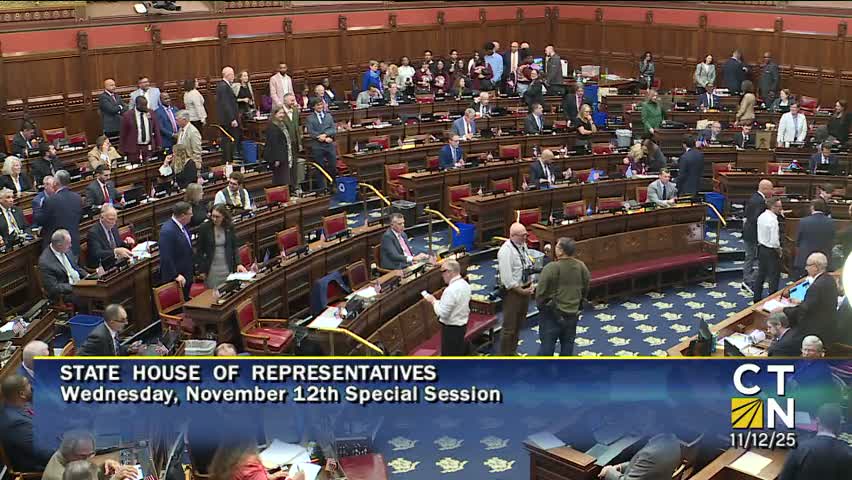
The Connecticut House approved an emergency-certified housing bill (HB 8002) on Wednesday, Nov. 12, 2025, after several hours of floor debate over process, local control and program details. The bill, carried by Representative Robert Felipe (housing chair), the majority leader and senators sponsoring the measure, instructs towns to prepare five‑year housing‑growth plans, creates new regional roles for councils of governments (COGs), and authorizes programs intended to accelerate housing production and support municipal infrastructure.
Supporters said the measure is designed to unblock constraints on housing development and give municipalities new tools and funding to build transit‑oriented and middle‑income housing. Representative Felipe told the House he expected the bill’s programs — from a housing‑growth program to grants for smaller municipalities and a pilot for portable shower/laundry units for people experiencing homelessness — to expand capacity where it’s most needed and provide incentives to align local plans with regional needs.
Opponents across the aisle argued the bill was presented with too little notice and insufficient public hearings. Representative Scott, the ranking member, repeatedly criticized the timing and transparency, saying members and the public received the 104‑page working draft on the morning of the special session and that key new sections had not had public hearings. Several members warned the measure would reduce local control by giving OPM and the COGs meaningful influence over municipal goals and by creating penalties — real or indirect — for towns that do not participate in the state’s planning framework.
Contested provisions included a new 'fair share' style allocation process administered in part by OPM and regional COGs; changes to parking minimums for small multifamily projects (reducing the threshold from 24 to 16 units in some cases); a priority housing development zone process that can accelerate moratorium eligibility; expanded fair‑rent commissions for smaller towns; and a new section authorizing the Department of Housing to develop or oversee housing projects on state land — a provision opponents described as a potential takeover of local land use on state‑owned parcels.
Several members also pressed for clarity on fiscal impacts. Representative Scott and others said the fiscal note had arrived on the floor shortly before debate; members described piecemeal cost estimates across the bill and asked how municipal mandates would be funded. Supporters said the bill was written with COG assistance and included grant funding and capacity support for towns that adopt plans.
The bill also creates a number of pilot programs including a small mobile shower-and-laundry pilot for people experiencing homelessness and targeted grant programs for municipalities under 50,000 population to develop 'middle housing.' Language on developer incentives and a housing-investment trust was included as a financing mechanism.
After protracted questioning and speeches from members on both sides of the aisle, the House recorded final passage of HB 8002. Members said they will monitor implementation closely; opponents urged legislative follow‑up in the next regular session to address procedural concerns and to review the new state and regional functions created by the law.
The bill now proceeds to the Senate for consideration. The House debate and vote were marked repeatedly by members asking for greater transparency about how numbers and regional allocations will be computed and how OPM and COGs will exercise their new roles.