Get Full Government Meeting Transcripts, Videos, & Alerts Forever!
Get email alerts on the Housing Supportive Housing topic
No spam. Unsubscribe anytime.
Iowa City panel: Officials say aging homeless population requires more affordable and supportive housing
Summary
Panelists from the Iowa City Housing Authority, Shelter House and Iowa Legal Aid told a public forum that older people are an increasing share of those seeking help, that vouchers and shelter capacity are strained, and that Shelter House estimates roughly 300 permanent supportive units are needed locally.
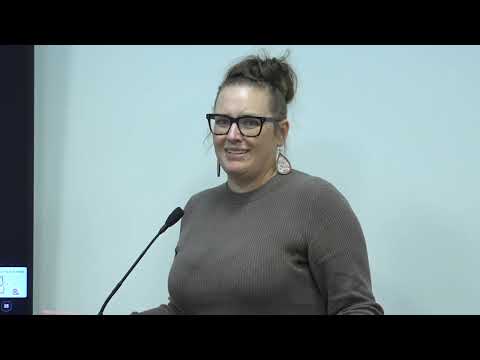
Rachel Carter, housing administrator for the City of Iowa City, Shelter House data director Rachel Carr and Elizabeth Norris of Iowa Legal Aid told an audience in Iowa City that the community’s homelessness response must expand to meet an aging population’s needs.
"The answer to homelessness is housing," Carter said in her opening remarks, summarizing the panel’s central theme. Carter described the Iowa City Housing Authority’s programs across Johnson, Iowa and northern Washington counties, saying the Authority administers about 1,595 Housing Choice vouchers and owns 86 public-housing units plus roughly two dozen affordable units rented at or below fair market rates. She said specialty vouchers for households exiting homelessness skew older and that many voucher holders live on very low monthly incomes.
Shelter House’s Rachel Carr described how the nonprofit operates a 70-bed year-round shelter and an expanded winter shelter, and runs permanent supportive housing that pairs affordable apartments with on-site services for people with long histories of homelessness. Carr gave 2024 outreach and shelter counts—including 217 people engaged by street outreach workers and a shelter population that included people in their 50s, 60s and one resident as old as 84—and said veterans figure among older cohorts.
Carr urged local advocacy and said Shelter House is working with the Corporation for Supportive Housing on a needs study that will recommend the number of permanent supportive housing units required. "We're looking at about 300 units," she said, adding that while the number seems large it is manageable, given the longevity of housing need among residents of supportive units.
Panelists emphasized the affordability gap in Iowa City: Carter said the local rent standard used for voucher calculations is about $921 for a one-bedroom, while many older residents subsist on Social Security in the $2,000–$2,200 monthly range. That gap, she said, makes it difficult for seniors to secure market rentals even when units exist.
The panel also raised structural barriers beyond building housing: landlords commonly screen for income and other criteria, and Iowa City’s prior local source-of-income protection for voucher holders was removed at the state level effective Jan. 1, 2023, panelists said, enabling some landlords to refuse tenants who use vouchers. Carr added that permanent supportive housing is often a long-term placement—"you can live in permanent supportive housing for as long as you so choose"—so building adequate stock matters for durable exits from homelessness.
The panel concluded by encouraging public action: support for nonprofit providers, advocacy for housing budgets, volunteering and contacting legislators on state-level policies that affect voucher acceptance and criminalization of homelessness. Carr and Carter said they would take audience questions and continue conversations after the forum. The Shelter House needs assessment is expected to be released publicly by the organization when complete.