
Laguna Beach hears OCPA presentation; council signals interest in feasibility study for community choice energy
Get AI-powered insights, summaries, and transcripts
Subscribe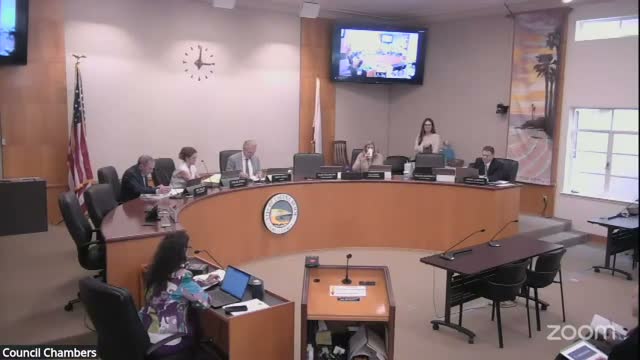
Summary
Orange County Power Authority officials outlined how a community choice aggregator would work for Laguna Beach, including product options, customer programs and an abbreviated timeline; council members and public speakers urged staff to start a feasibility analysis and committee review with no direct fiscal commitment from the city.
Orange County Power Authority officials gave Laguna Beach city leaders an overview of how a community choice aggregator (CCA) would operate and the potential benefits for residents and businesses.
Joe Mosca, OCPA chief executive, told the council that OCPA purchases generation on behalf of member cities while investor‑owned utilities (Southern California Edison and SDG&E) continue to deliver service and bill customers. "We procure renewable energy, helping our cities and their residents and businesses reduce their greenhouse gas emissions," Mosca said. He described OCPA as a not‑for‑profit joint powers authority that currently serves roughly 177,000 customer accounts and expects to exceed 200,000 as additional cities join.
The presentation described three default products a city could select at launch: a basic product at the state's renewable portfolio standard (RPS) minimum, a "Smart Choice" tier (about 60% renewable plus carbon‑free resources), and a 100% RPS‑qualified renewable product. Jackie Henderson, OCPA director of communications, outlined customer programs including a $1,000 battery‑storage rebate, energy‑efficiency kits, free EV chargers distributed through programs, and a Clean Energy Access green tariff (preliminarily approved by the California Public Utilities Commission) that would offer qualifying low‑income customers 100% solar with an additional 20% bill discount.
Council members questioned operational details and local impacts. Mosca said the council would set the community default product at launch and that individual customers would retain the ability to opt between offerings after enrollment. He said OCPA honors annual true‑up terms for net generators and currently honors the older NEM 2 structure with an extra roughly 10% credit to net generators.
Mosca described the next steps under state law: OCPA requires a feasibility analysis that includes access to a city's historic electric load data from SCE/SDG&E, internal and third‑party financial reviews, and a subsequent series of local steps (resolution, ordinance, and CPUC filings) before final authorization. He said OCPA would take primary responsibility for the feasibility‑study costs but warned OCPA expects demonstrable city interest before committing large staff resources.
Members of the public who spoke during the study session largely supported exploration. Danny Gray and other residents cited benefits for renters and small businesses; climate advocates and local business leaders urged moving forward.
Council members expressed informal support for beginning the feasibility analysis and asked the environmental sustainability committee to undertake a deeper review and return with recommendations. City staff said the council could give direction immediately and then formalize it at a future agenda. The council did not take a formal vote during the study session.
What happens next: staff will arrange next steps to initiate a feasibility analysis if the council formalizes direction, and OCPA offered to supply requested financial and programmatic details to city staff and the committee.