Get Full Government Meeting Transcripts, Videos, & Alerts Forever!
Get email alerts on the Youth Violence Prevention topic
No spam. Unsubscribe anytime.
County highlights community‑based youth violence prevention tied to OST supports
Summary
County officials described community‑based youth opportunity centers and street‑level outreach that target high‑need neighborhoods; program leads said neighborhood‑focused, saturated supports reduced arrests in pilot areas and urged scaling those models alongside better data and coordination.
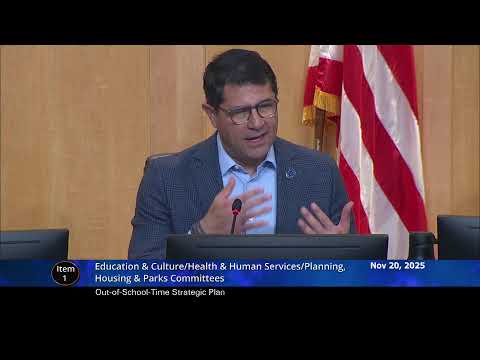
Montgomery County officials and program leaders told the County Council on Nov. 18 that out‑of‑school‑time programs can play a direct role in preventing youth violence when services are delivered in community settings tailored to local needs.
Luis Cardona, Senior Administrator for the Community and Youth Violence Prevention and Intervention Program, described shifting youth opportunity centers, safe‑space programming and weekend street outreach into neighborhoods with high risk factors. Cardona said the approach — combining nearby programming, targeted outreach and partner coordination — produced measurable reductions in youth arrests in the pilot area.
"We moved several of our programs... to be focused directly in the community," Cardona said, noting one neighborhood recorded no arrests of young people under age 24 in September after a saturation of supports.
Why it matters: councilmembers said timely after‑school and summer programming is a prevention tool that can reduce violence and truancy and urged agencies to prioritize geographic targeting once the county’s data‑matching and MOU work are complete.
Program examples and capacity
Presenters from Recreation and DHHS described complementary efforts: Rec’s regional programming, TeamWorks youth employment and inclusion supports, and DHHS street outreach and Bridges to Wellness work with youth at risk. Recreation said demand for summer programming and inclusion services is growing and that improving workforce capacity is necessary to sustain quality.
Council response and requests
Councilmembers pressed for clear protocols for early engagement with street outreach teams, for pilot evaluations that can be scaled, and for data workflows to identify hot spots. Several councilmembers said youth violence concerns make the coordination and data work urgent, asking agencies to clarify how the OST network will prioritize high‑need areas.
Next steps
Agencies agreed to bring data and mapping updates, including proposed shared metrics and target ZIP codes, to the council in follow up sessions so the county can pair investment decisions with evidence of need and program effectiveness.