
OSBA leads governance workshop as board prepares superintendent search and self‑assessment
Get AI-powered insights, summaries, and transcripts
Subscribe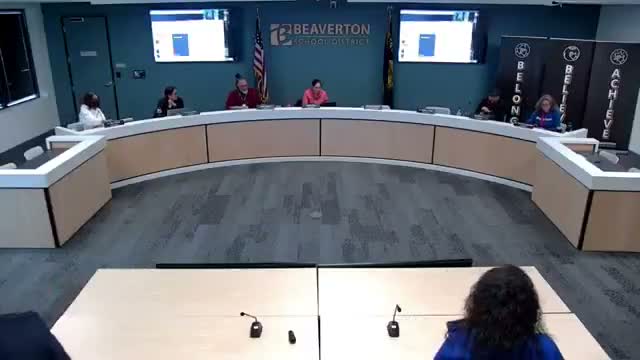
Summary
OSBA facilitator Kristen Miles led a balanced‑governance workshop at the Jan. 27 retreat, guiding small‑group standards work, recommending a board self‑assessment and quarterly superintendent check‑ins, and prompting the board to schedule a student‑data work session to inform goals and the superintendent search.
The Oregon School Boards Association presented a governance workshop to the Beaverton SD 48J board at the Jan. 27 retreat focused on the 12 balanced‑governance standards and practical steps boards can take to support student outcomes and a successful superintendent transition.
OSBA presenter Kristen Miles framed the training with research connecting board cohesion, a shared belief that “all students can and will learn,” and strategic monitoring to improved student outcomes. “When all board members share that belief,” Miles said, boards direct resources and decisions in ways that affect classroom instruction and student learning.
Board members worked in small groups to score six standards each and returned with consistent themes: strengths in vision‑directed planning, effective leadership and accountability; growth opportunities in community engagement, using disaggregated data for continuous improvement and cultural responsiveness. Members noted the assessment would help align the board before hiring a permanent superintendent and suggested a board self‑assessment this spring.
Miles recommended board practices to support a superintendent, including quarterly evaluative check‑ins (low‑stakes, supportive reviews), a small set of prioritized performance goals tied to the strategic plan, and public celebration of district successes. The training included scenarios about appropriate board responses to constituent complaints, emphasizing routing concerns to building‑level staff and board leadership rather than public social media posts or unilateral board member action.
Next steps agreed by the board included scheduling an earlier work session on student achievement data to inform budget decisions and the superintendent search, and conducting a balanced‑governance self‑assessment (OSBA offers an 80‑question instrument) with facilitated review and goal‑setting to follow.
The session was framed as practical rather than theoretical: the presenter offered to compile group worksheets into an executive summary for the board and to return final materials after the retreat.