
District reports 473 students receiving special education services; leaders describe hub, staffing and IEP work
Get AI-powered insights, summaries, and transcripts
Subscribe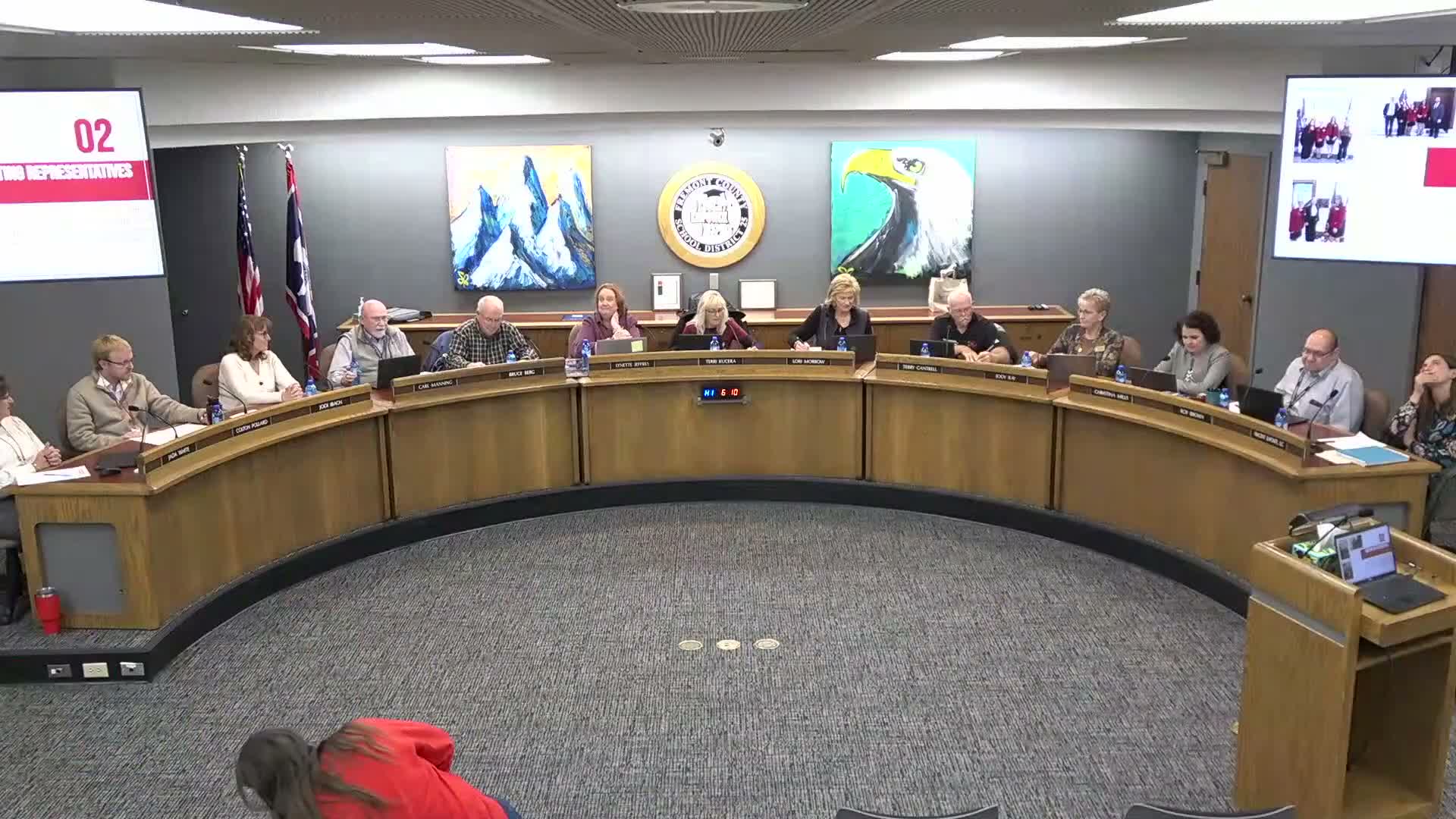
Summary
Special services staff told the board the district currently has 473 students receiving special education services and outlined staffing contracts (1.5 school psychologists, 1 occupational therapist), a district SPED hub for documents, training with Dr. Tessie Bailey, and ongoing parent engagement efforts.
Special services staff presented a detailed report to the Fremont County School District #25 board, saying the district currently has 473 students identified for special education services and summarizing the district’s approach to meeting those needs.
"Currently we have 473 identified students receiving special education services," Speaker 3 said. Of those, the presenter said 259 receive speech services; 118 receive occupational therapy; 31 receive adaptive physical education; 20 receive physical therapy; 2 receive orientation and mobility services; and 9 receive deaf and hard-of-hearing services. The staff reported they have held 249 IEP meetings so far this year, including triennials and initial evaluations.
To manage caseloads, the district has contracted for "1 and a half school psychologists and 1 occupational therapist," Speaker 3 said. Staff also described a new special education policy and procedural manual developed with assistance from a state-provided special education attorney and the creation of a district-wide special education hub (Medley/SPED Advantage, PowerSchool, TalentEd, Navigate360) to centralize IEP documents, forms and compliance guidance.
The presentation outlined forms and processes used in eligibility and service decisions (referral/sphere form, functional behavioral assessment and collaborative behavior intervention forms, partial day schedule application) and described efforts to schedule IEP meetings around parent availability. Speaker 3 said parent engagement has "improved" but varies by building; the district is working to develop building-level parent training to address different local needs.
Board members asked about advocacy and outside supports; presenters confirmed Wind River Cares and Medicaid waiver advocates sometimes attend meetings and that the state provides advocacy services. Dr. Tessie Bailey of the state department led a specialized instruction professional development session (January 5) for SPED-certified staff, staff said.
The presenters emphasized that these tools, staffing contracts and procedural updates are intended to improve compliance and consistency across buildings and to make information accessible to district staff and families.
Next steps include continuing to build parent training offerings by building, monitoring service contracts to match caseloads, and the board's ongoing review of staffing and policy implications.