
Lancaster officials report drone‑assisted homeless count; mayor says city investigating claims of nonlocal influx
Get AI-powered insights, summaries, and transcripts
Subscribe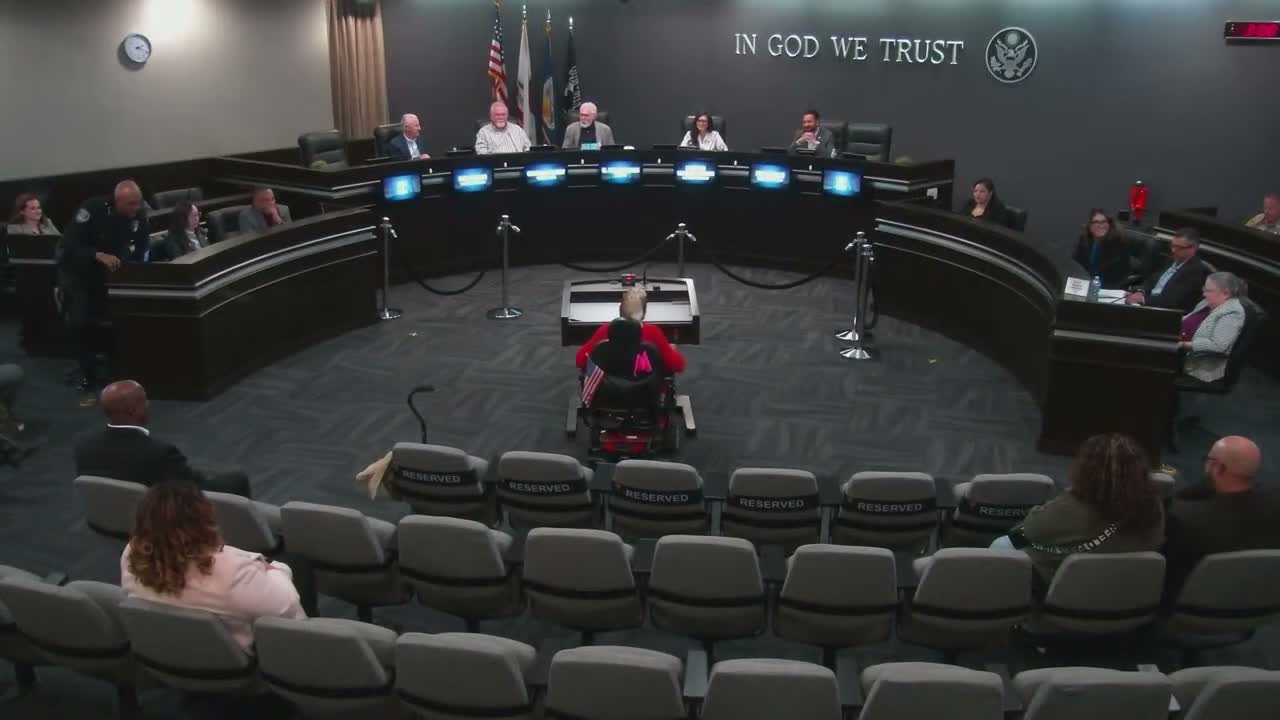
Summary
City staff described a drone‑assisted homeless census and a successful crime‑reduction effort aided by new technology. The mayor said the city is investigating reports that groups from Los Angeles are placing people on trains bound for Lancaster and cited an estimated annual public cost of about $36,000 per nonlocal unhoused person.
City staff and councilmembers used their reports to recap recent community events and to describe new data and technologies used in Lancaster’s homelessness work and public safety efforts.
Heather Barton briefed the council on the city’s homeless census work, thanking Lancaster Police Department drone pilots Tim Bush and Drew Huebner and saying the drone collaboration allowed faster, more accurate counts. "The numbers will be out in May or June, and we'll have accurate numbers by then," Barton told the council, describing three days of early‑morning counting supported by volunteers on the ground.
In extended remarks, the mayor praised recent crime reductions and credited new technology and coordination between police and other staff. The mayor also said the city "is investigating and gathering evidence about how various groups in LA are putting unhoused people on trains and sending them up here," and urged coordination among fire, police and code enforcement to close dangerous unlicensed care homes. The mayor characterized the annual cost for a nonlocal unhoused person to the Antelope Valley at roughly $36,000, citing law enforcement, code enforcement and clean‑up costs.
Councilmembers and staff also noted a $1,000,000 congressional grant to add technology to the Lancaster Police Department, which officials said is one factor behind improved operations. Staff emphasized that official homelessness counts will be published later this spring when data are finalized.
The council did not adopt new enforcement policy at the meeting; the mayor directed staff to coordinate protocols and to return with proposals for interagency action where appropriate.