Get Full Government Meeting Transcripts, Videos, & Alerts Forever!
Get email alerts on the Venezuela Resolution topic
No spam. Unsubscribe anytime.
Eureka council signals consensus to pursue anti-war resolution after public push
Summary
After multiple public commenters urged the city to oppose U.S. military action toward Venezuela, Eureka councilmembers signaled consensus to agendize a resolution opposing recent attacks and to send an existing human-rights resolution to federal officials for immediate transmission.
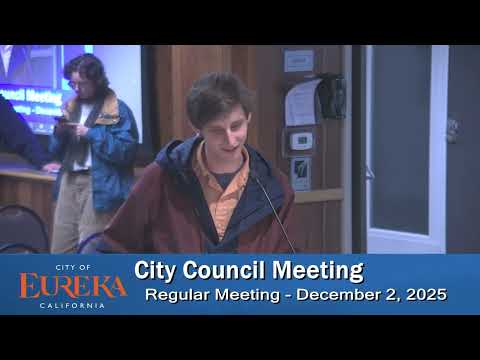
Eureka’s City Council agreed on Dec. 2 to pursue a resolution opposing attacks on Venezuela after several members of the public urged the council to act during the meeting’s public-comment period.
Multiple speakers — including David Haney of the Humboldt Antiwar Committee and other local activists — asked the council to place an anti-war resolution on an upcoming agenda. Haney said the U.S. approach amounted to “colonial looting” and urged local elected officials to show solidarity with people in Venezuela. Rick Toledo cited Marquette polling numbers to argue that sizable majorities across party lines oppose military action.
Councilmember Fernandez asked that the matter be returned to council in the near term. “I would like to take what was proposed at public comment and have a resolution opposing the attacks on Venezuela come back to council,” Fernandez said during the future-agenda discussion. Councilmembers signaled support for bringing a resolution back and for including language supporting the War Powers Resolution if appropriate.
City staff and the city attorney clarified process: sending existing council correspondence to federal officials (for example, forwarding the city’s human-rights resolution) can be done by direction of council, while any new legislative action would need to be agendized under the Brown Act. Mayor and councilmembers discussed using the city’s previously adopted human-rights resolution as an immediate vehicle to communicate concerns to federal elected officials, and asked staff to prepare contextualized correspondence.
Council members did not adopt a new legislative resolution at the Dec. 2 meeting; instead they directed staff to bring the item back for formal consideration. The next step is for staff to prepare the draft language and for the council to place the item on a future agenda for a formal vote.