
State officials plan 2.5-foot drawdown of Alton Power Dam; removal remains a long-term possibility
Get AI-powered insights, summaries, and transcripts
Subscribe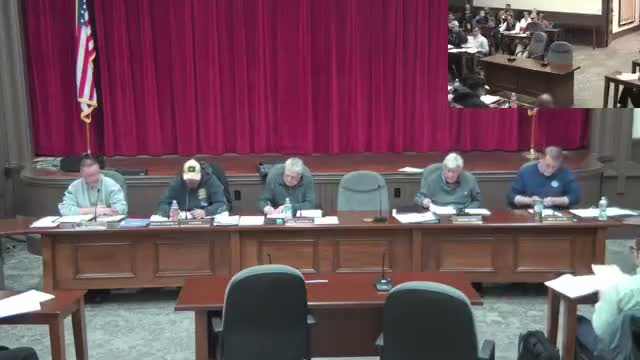
Summary
NH Department of Environmental Services announced a 2.5-foot drawdown of Alton Power Dam this spring to support safety and environmental analysis; DES and Fish & Game described alternatives, broad cost ranges, monitoring and a report due in 2027 that will guide whether full removal occurs.
New Hampshire Department of Environmental Services (DES) officials told the Alton Board of Selectmen on Jan. 27 that the state plans a 2.5-foot drawdown of the Alton Power Dam this spring to support sediment and habitat assessments and to reduce risk while consultants complete safety analyses.
Charlie Krautman of DES’s dam bureau opened the presentation by citing a statutory notice (given in the transcript as "Per RSA 4 82 colon 13") and said recent consultant work found the dam lacks sufficient hydraulic capacity and does not meet certain sliding and gravity stability calculations. DES described three alternatives that have been evaluated: (1) remove stop logs and rehabilitate the low-level outlet (partial action; lower cost), (2) install a crest gate for better flow control (higher cost), or (3) remove the dam entirely.
Speakers from DES and the dam bureau said removal is not a done deal. A full consultant report is expected in 2027; removal could occur between 2027 and 2031 if funding and sediment testing permit. Cost estimates discussed ranged widely: a partial cut/rehab option was described at roughly $2 million, a crest-gate/rehabilitation option at approximately $5–6 million (with likelihood it could rise), and a full removal estimate that could range from under $1 million up to $18 million depending on sediment contamination — presenters suggested a working range around $4–6 million based on current information.
Residents asked about notice, downstream water-quality monitoring, sediment release, impacts on Mill Pond and waterfront property, flood risk and how removal would affect fish and wildlife. DES said handouts and updates would be posted to town channels, that drawdown would proceed as a controlled, monitored removal of stop logs (roughly 6–8 inches per day recommended by Fish & Game) with adjustments if turbidity or impacts arise, and that the drawdown will help reveal physical constrictions and sediment distribution upstream. Fish & Game staff said they generally support dam removals for ecosystem benefits and would not back hydropower at this site because of environmental trade-offs.
Town officials and residents asked about grant opportunities; DES noted that dam removal projects can be eligible for specialized grant funding (e.g., aquatic mitigation/resource funds) that are not the same as capital funds and may help cover contaminated-sediment removal costs if present. DES and Fish & Game encouraged affected property owners to engage with legislators and the state as funding choices advance.
DES officials said they will keep the town informed of schedules and findings and that the drawdown — and subsequent sediment sampling and analysis — will be used to decide whether partial modification or removal is the preferred option.