Get Full Government Meeting Transcripts, Videos, & Alerts Forever!
Get email alerts on the Ambulance Billing topic
No spam. Unsubscribe anytime.
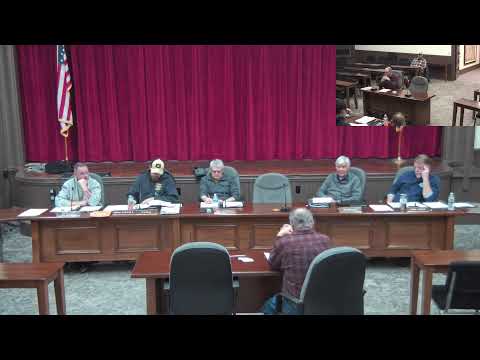
Alton selectmen agree to remove collections language from proposed ambulance-billing policy after residents protest
Summary
Following a public hearing, the Alton Board of Selectmen agreed to remove any policy language that would send residents to collections and will return a revised ambulance-billing policy that allows standard billing but no collections. Residents and the town’s ambulance chief exchanged data on collections and insurance reimbursements.
A public hearing on Jan. 27, 2026, at the Alton Board of Selectmen’s meeting ended with the board instructing staff to remove any references to sending residents to collections from the town’s updated ambulance-billing policy.
The hearing opened with a presentation from the chief (identified in the transcript as the department chief) who said the policy had not been updated since 2017 and needs revision to align with recent state law changes affecting reimbursement rates. He described the ambulance revolving account as a fund used to offset large equipment costs such as ambulances and cardiac monitors.
Residents and community advocates opposed language they said would discourage people from calling for emergency care. “Why in God’s earth would we want to send our own citizens to collections?” said Reuben Wentworth, a former selectman who addressed the board during public comment. Chris Racine, director of Alton Community Services, recounted a case in which a 78-year-old client refused hospital transfer because she feared the bill, and asked the board to remove Section 8 (collections) from the draft.
Board members pressed the chief for data on outstanding balances and collection practices. The chief said that, for 2025, roughly 5% of transports were uninsured, and reported roughly $1,200,000 in billable charges with about $342,000 actually collected against allowable federal rates (described as a roughly 57% collection rate on allowed amounts). He also said some direct insurance payments had been made to patients in the prior 18 months totaling around $18,000 that the town did not receive because checks were not forwarded.
Town counsel reviewed the policy language and said the proposed wording was legally defensible. Still, after residents’ testimony and board discussion, the chair closed the hearing and said the selectmen would not approve the draft as written and would return a revised version with the collections language removed and with clearer hardship/abatement procedures.
The board did not adopt a final ordinance at the meeting; the item was tabled to allow staff to prepare a final draft that excludes any ability to send residents to collections but preserves the town’s ability to send ordinary bills to residents who wish to pay.