
Placerville staff propose multi‑year water and sewer rate increases to cover debt, staffing and rising costs
Get AI-powered insights, summaries, and transcripts
Subscribe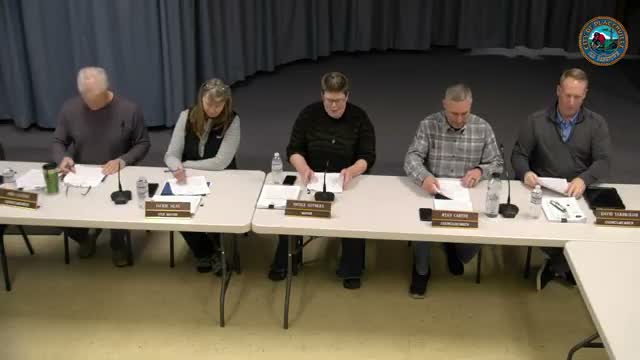
Summary
City staff presented a five‑year rate plan that would raise water and sewer charges in phases to cover rising wholesale costs from El Dorado Irrigation District, debt service on past plant upgrades and new staffing tied to regulatory needs. Council asked for more detail before moving to formal notice.
City of Placerville staff on Jan. 22 presented a five‑year plan of increases to water and sewer rates intended to close projected revenue shortfalls driven by wholesale water cost hikes, debt service from past plant upgrades and ongoing operating cost inflation.
"We had to finance $45,000,000 worth of improvements" to the wastewater treatment plant and "41¢ just goes to the debt," City Manager Dave Warren told the council while explaining that debt service now consumes a large share of the sewer enterprise budget. Staff said the plant upgrade principal remaining is about $35 million and that debt service represents roughly 41% of the sewer enterprise operating budget.
Natalie Tornicasa, interim director of finance, described the operational drivers behind the recommendations—personnel, services and supplies, equipment and debt—and told the audience that personnel benefits and supply costs have risen considerably: the city saw a 13% increase in employee benefits this year and assumes services/supplies inflation in its five‑year forecast.
Consultant Michael De Groot of Bartle Wells Associates said Placerville purchases wholesale water from El Dorado Irrigation District (EID), which the city expects to raise its wholesale price about 12% per year for multiple years. De Groot said the proposed water increases would be phased over five years (initially 15% in year one, then additional annual increases) and that even after the first increase, Placerville’s typical bimonthly water bill for a 1,200 cubic‑foot two‑month usage would remain below the regional average: "under your current rates, that's $87.77 for two months" and the proposed first‑year bill would be about $100.94, he said.
On the sewer side, staff said the enterprise is more heavily exposed to fixed costs and debt; the current single‑family sewer base charge is $205.81 bimonthly and the typical sewer bill (average usage) is about $210.58 now and would rise under the proposed schedule. De Groot summarized the sewer projection as showing growing deficits under a no‑action scenario and said the initial recommended sewer increase would be significant to prevent growing shortfalls.
Staff also recommended operational changes intended to reduce future costs and improve reliability, including reclassifying the public works superintendent to deputy director, adding three utility service specialist positions for proactive hydrant and valve maintenance, and creating a clearer operator succession path at the water reclamation facility. Chief Plant Operator Michael Fritche emphasized the difficulty of recruiting and retaining certified Level 3 and Level 4 operators and said modest pay and position structure changes would help retain institutional knowledge.
To reduce the proposed rate increases, staff presented options for council consideration: delay hiring some positions, eliminate the vacant‑home sewer discount (estimated cost to the sewer fund ~$37,525/year), tighten leak‑adjustment policies (limit frequency), implement a small convenience fee for credit‑card payments (staff noted processing cost recovery would save roughly $28,000 to $67,000 depending on scope), and review the 25% lifeline discount for qualifying low‑income customers (current combined cost about $100,000 annually). Staff stressed these were options for council direction, not staff recommendations.
Several members of the public urged alternatives such as selling reclaimed water or using a sales tax to subsidize rates. Staff and the chief operator explained regulatory and water‑rights constraints—NPDES permit requirements and state water‑right rules—and the very large capital cost and storage requirements that would be needed to develop a reclaimed‑water distribution system.
Councilmembers generally declined to delay implementing critical staffing changes but indicated support for eliminating the vacant‑home sewer discount and for reforming leak‑adjustment procedures (suggestions ranged from once per year to once every two or three years). Many councilmembers asked staff to return with clearer visuals showing combined water + sewer impacts on a typical household, a breakdown of fixed‑cost components (debt, standby staff, electricity, chemicals), and a precise split of how much of the initial increase is attributable directly to EID wholesale cost increases.
Next steps: staff requested authorization to issue a Proposition 218 45‑day notice to ratepayers (mail by Feb. 28) and scheduled a public hearing for April 14; no rates were adopted at the workshop. If the council proceeds through the Prop 218 process and adopts rates, staff said new rates could be effective April 16 and would first appear on July 2026 bills.
The council opened the matter for additional public comment before adjourning at 8:12 p.m.