
Placerville council adopts Western El Dorado County wildfire protection plan
Get AI-powered insights, summaries, and transcripts
Subscribe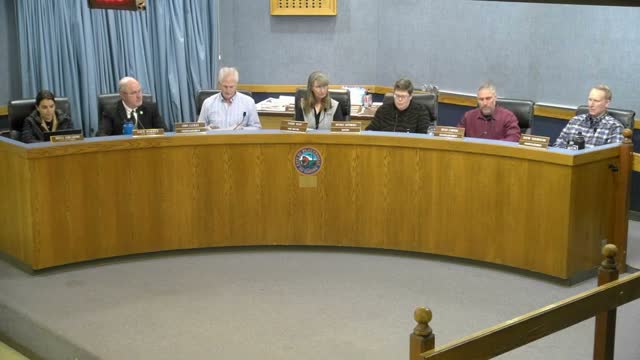
Summary
The Placerville City Council unanimously approved the updated Western El Dorado County Community Wildfire Protection Plan, which steers countywide mitigation projects, coordinates funding and creates a project-tracking working group to move regional fuel‑reduction and evacuation projects toward implementation.
The Placerville City Council on Jan. 27 unanimously adopted the updated Western El Dorado County Community Wildfire Protection Plan (CWPP), authorizing the mayor to sign the final document and enabling the county and partners to pursue larger, regional mitigation grants.
Tanya Harlow, acting program manager for the El Dorado County Office of Wildfire Preparedness and Resilience, told the council the update started in 2024 and was driven by extensive community engagement: 25 site visits, nine public workshops and 1,652 public survey responses. Harlow said the CWPP aligns with the county general plan safety element and CAL FIRE’s unit plan and creates a project coordination working group to avoid competing grant applications and to turn planning into “shovel‑ready” projects.
Harlow described recommended actions across scales — landscape, community and parcel — including shaded fuel breaks, defensible‑space outreach, home hardening, evacuation planning and improved ingress/egress. She said the plan was developed with El Dorado County Fire Safe Council chapters, CAL FIRE, local fire districts, federal land agencies, utilities and consultants (Jensen Hughes).
Public comment from the Placerville Fire Safe Council emphasized local vulnerability and urged residents to maintain defensible space. After a brief council discussion and expressions of support for the outreach, a councilmember moved to accept staff’s recommendation; the motion passed on a roll call vote recorded as unanimous.
The action directs the city to accept and file the county CWPP and authorizes the mayor to execute it as the final version, a procedural step that local staff said will help the county secure state and federal grant funding tied to recognized CWPPs. Harlow said the plan is intended as a living document, with monthly project‑coordination meetings and an anticipated public story map to show projects and successes.
Next steps described by Harlow include implementation via the project working group, pursuing funding aligned to prioritized projects, and continuing community outreach to translate plan actions into on‑the‑ground mitigation.