Get Full Government Meeting Transcripts, Videos, & Alerts Forever!
Get email alerts on the Budget topic
No spam. Unsubscribe anytime.
Planning Department presents cautious FY2026—2028 budget; personnel costs remain near 75%
Summary
Planning Department staff presented an informational FY2026—2028 budget noting slow revenue growth, reduced grant funding, and an organizational change embedding some environmental review staff into development review; commissioners requested regular updates on equity implementation and staffing.
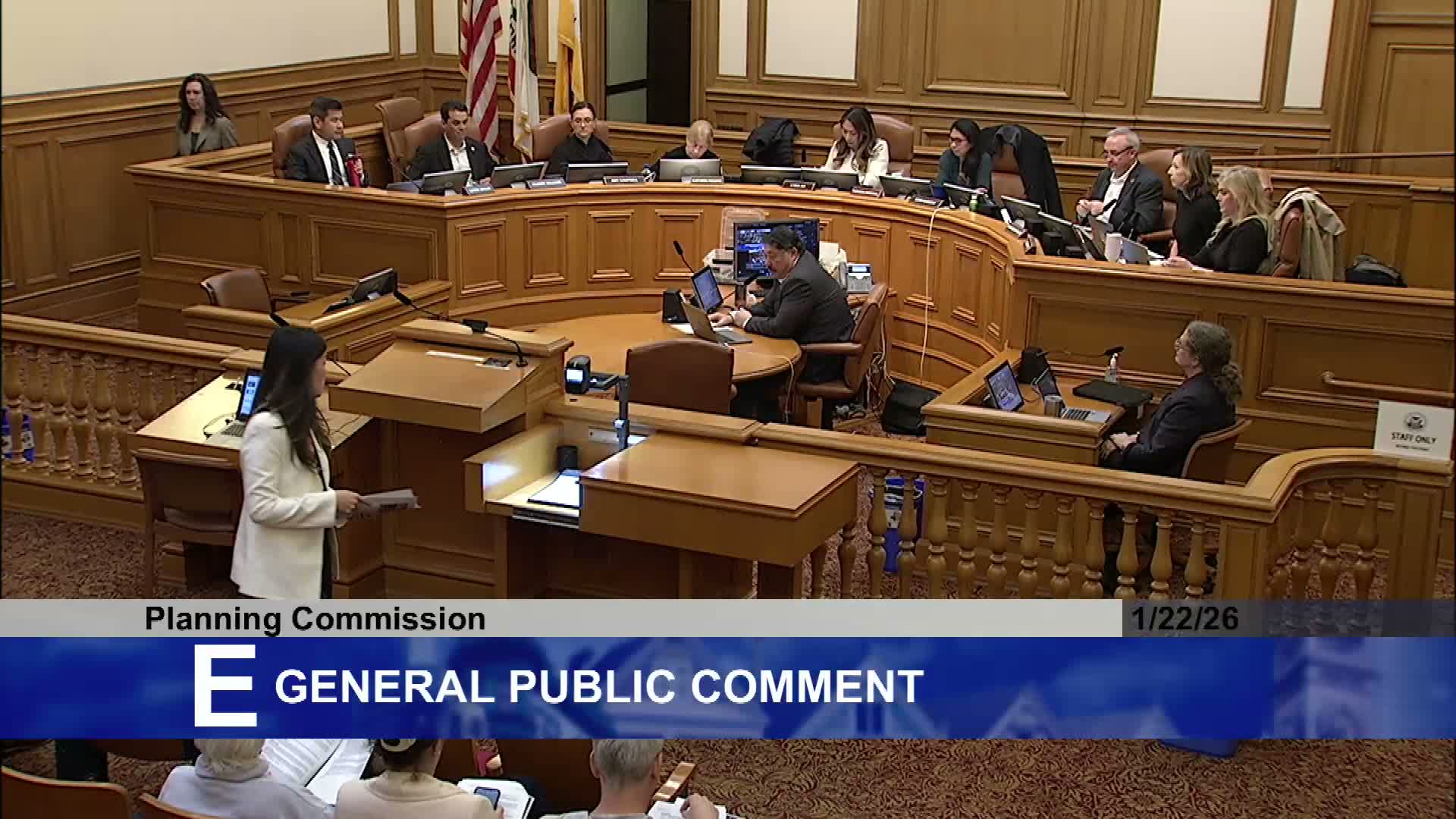
The San Francisco Planning Department told the Planning Commission on Jan. 22 that its proposed FY2026—2028 budget is largely status quo, with personnel costs continuing to make up roughly three-quarters of departmental spending and fewer large grants expected this cycle.
Director-level staff and the department's budget team said fee revenue from building permits and planning applications will remain the primary funding source. The department noted a recently legislated change to collect most building-permit fees up front (described as 100% upfront for most reviews, replacing a prior 25%/75% split), a move staff said will improve cash flow but not materially increase projected revenue this year.
The presentation emphasized a decline in one-time, high-dollar grants from the prior budget cycle. Staff listed three grants they currently expect to rely on: Ocean Protection Council (noted as planned for July), a HUD pro-housing grant ($1,500,000), and a National Park Service award ($40,000). Staff said any additional grants would arrive through an accept-and-expend process requiring Board of Supervisors approval.
Commissioners and staff discussed personnel and organizational changes at length. The department described a reorganization that embeds some environmental-review staff into development-review teams for lower-tier environmental reviews (exemptions, CPEs, GPEs and negative determinations) while retaining a separate environmental planning division for public projects and complex EIRs. Lisa Gibson, identified in the meeting as the city's environmental review officer, said CEQA compliance remains a core obligation despite the reorganization.
Staff framed the reorganization as a way to create cross-training and career-path opportunities for planners while protecting expertise for complex public-project reviews. Commissioners asked for a cadence of follow-up reports; staff agreed to return with updates and noted the Office of Racial Equity will include a Phase 2 implementation update later this spring.
On expenditures, staff said salaries and fringe account for about 74% of costs this cycle and are projected to rise to about 76% the following year. The presentation also highlighted a long-requested IT equipment purchase (maintenance last updated in 2018) and noted that interdepartmental service charges are set by other city offices and therefore outside planning's direct control.
Commissioners generally praised the department's caution and asked staff to continue providing clear updates on how equity work is being embedded across divisions. The presentation was informational; the commission will see the budget again in February for endorsement.
The department requested the commission accept the informational presentation; commissioners thanked staff for the overview and asked for additional reports on the work program and equity staffing.