Chico council votes 4–3 to add Galleri cancer screening option for Public Works employees to FY26–27 budget
Loading...
Summary
After debate about scientific evidence and equity, the Chico City Council voted 4–3 to include funding in the FY 2026–27 budget development process to offer the Galleri early‑detection blood test to Public Works operations and maintenance employees, with staff estimating up to $66,000 if all 103 employees participate.
The Chico City Council voted 4–3 on a substitute motion to include funding in the fiscal 2026–27 budget development process to offer the Galleri early‑detection blood test to Public Works operations and maintenance employees.
Assistant City Manager Eric Epsison told the council the test screens signals associated with more than 50 types of cancer and recommended offering it to Public Works O&M staff as an equity and employee‑wellness measure; he estimated up to $66,000 if all 103 employees participated and suggested an interval of every three years for follow‑up testing. "Providing [the test] to O&M employees acknowledges that they too are faced with these occupational hazards," Epsison said.
Council members debated the test’s scientific validation and logistics. Council member Winslow and others raised concerns that Galleri (a commercially marketed test) lacks full FDA approval and that independent, peer‑reviewed evidence is still emerging; Winslow cited recent critical articles and noted an unfinished U.K. study. "I was asking myself, is this a test that's overhyped in a sales campaign by multibillion‑dollar Silicon Valley biotech?" he said, calling for HR and expert review and suggesting the topic be handled in labor negotiations. Several council members urged deferring to medical and HR professionals for deeper review.
Supporters argued the test is minimally invasive and could help detect cancer earlier in workers exposed to asphalt fumes, diesel exhaust and other occupational carcinogens. "If we catch one case early, you save thousands," Council member O'Brien said, noting the test is intended to supplement, not replace, standard care.
Two public commenters addressed the item. Laurie Monroe urged caution because Galleri is not FDA‑approved and warned of false positives that can lead to costly downstream testing. Jason Anderson, representing O&M employees, said crews appreciated the offer and expressed concern about daily exposures to hot asphalt, thermoplastics and on‑the‑job hazards.
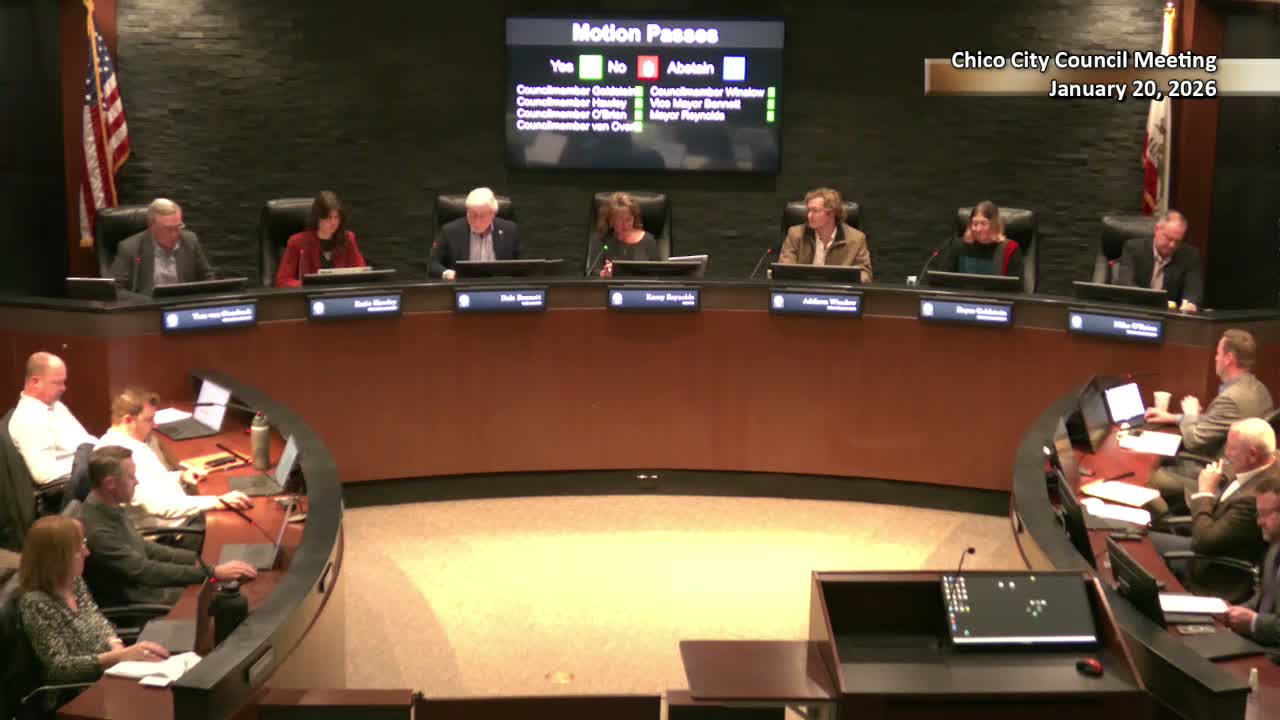
Council member O’Brien offered the substitute motion to include the test in the FY 2026–27 budget development process; Council member Van Overbeck seconded. The council clerk recorded the vote as: Yes — O’Brien, Van Overbeck, Vice Mayor Bennett and Mayor Reynolds; No — Goldstein, Holly and Winslow. The motion carried 4–3.
The council’s direction is to include an initial allocation for the test in the coming budget; staff said participation would be voluntary and that HR could later recommend alternatives or eligibility thresholds. Several council members urged additional expert consultation and possible follow‑up review of outcomes and costs.
Next steps: the allocation will be incorporated into the budget development materials proposed in May and considered during the June budget approval process.