Commission rejects special‑magistrate settlement for Windward Pass redevelopment, sends developers back to community process
Loading...
Summary
After FluEDRA mediation produced a special‑magistrate recommendation that reduced unit counts and removed some ancillary uses, the commission said the revised Windward Pass plan still needs broader community review and additional public benefits; the commission voted to deny the magistrate's settlement recommendation.
The commission voted on Jan. 27 to reject a special‑magistrate FluEDRA recommendation that would have approved an amended Windward Pass development order for the 3800 block of Gulf Boulevard. The magistrate’s recommendation—issued in December following an October mediation—would have removed water‑sport rentals and third‑party vendors, eliminated a central parking garage, reduced unit density (104 to 100), relocated pools to eliminate the need for a variance, and added sound‑governors and decorative promenade pavers.
City counsel Jeff Wright told commissioners the recommendation is advisory; the commission can approve, modify or reject it. Commissioners and many residents who spoke at the hearing said the project remains large, will draw heavily on community density bonuses, and needs robust public engagement and clearer community benefits if the city is to allocate density units.
Applicant’s changes: Applicant counsel Luke LaRoe and architect Jack Bozniak described substantial design revisions that opened near‑water views, reduced building mass, relocated pools into internal courtyards and removed the parking garage. Bozniak said nearly half the site would be open to view corridors and public walkway, and reduced unit counts reflect the concessions.
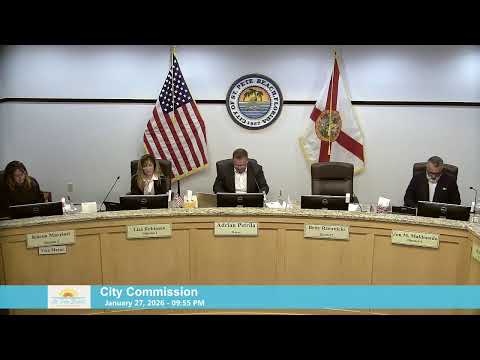
Commission reaction and vote: Commissioners expressed consistent concern about the scale, the concentration of density units in one parcel, noise and environmental impacts to the bayou, and the absence of additional, city‑wide public benefits tied to a large bonus allocation. Commissioner comments emphasized community meetings and wider notice: "This is a significant property... it is due for significant community input," one commissioner said. The commission then voted to deny the special magistrate’s recommendation (recorded roll call: motion carried 4–0).
What happens next: Denying the recommendation means the project as proposed per the magistrate’s terms will not be automatically adopted. The applicant may file revised applications, pursue additional public engagement, or seek judicial review per statutory process. Multiple commissioners urged the developer to reconvene public meetings and consider offering tangible community benefits if seeking large density allocations in future applications.