St. Pete Beach details $58M FY‑26 capital program, launches public project tracker
Loading...
Summary
Public services director Camden Mills told the city commission the five‑year CIP totals about $213 million with $58 million budgeted for FY‑26; the city has encumbered roughly 24% and will introduce an online interactive project tracker to show budgets, timelines and status for 53 projects.
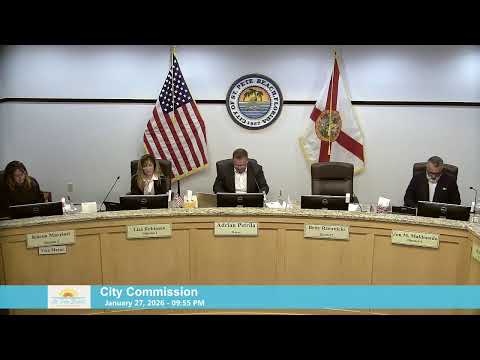
Camden Mills, the city’s public services director, told the St. Pete Beach City Commission on Jan. 27 that the city’s five‑year capital improvement program totals about $213 million and that the fiscal‑year 2026 budget includes just over $58 million for capital projects. "Currently, through quarter 1, the city has encumbered 24% of our planned spending," Mills said, adding that the city had about $11.4 million encumbered at the time of the presentation.
Why it matters: Mills said most of the CIP funds are focused on recovery, resiliency and reliable infrastructure after recent storms. Elected officials pressed staff on priorities—sewer and stormwater repairs surfaced repeatedly as commissioners asked whether funds can be reallocated from less urgent projects.
Key projects and timing: Mills reviewed 10 projects in active construction. He said the 36th Avenue seawall replacement carries a $650,000 budget, contracts are awarded, and construction will await Duke Energy’s relocation of an electrical line. Dune walkover replacements at seven locations have FEMA public assistance obligated and environmental permitting is complete; staff anticipates construction to begin within weeks. Pump Station 1 is in a major phase of work through July 2026, with a long‑lead generator expected in September–October. Mills also reported the city’s contractor had cleaned roughly 65,000 linear feet of sewer main and private laterals during the cleaning and inspection program.
Transparency push: To give residents an at‑a‑glance view of progress, the city is building an interactive projects dashboard that will include a map, per‑project budgets, timelines, phases and simple Gantt charts. "Our goal with this is transparency and accountability," Mills said, describing plans to publish the tracker before the next quarter update.
Funding notes: Mills said the CIP totals shown in the presentation reflect currently budgeted city funds and do not yet include potential future FEMA reimbursements. He reported the city manages about $5.2 million in active discretionary grants and has $13.8 million in grant requests outstanding, much of it for hazard mitigation work.
What’s next: Staff will refine the tracker content and return to the commission with updates; several commissioners asked staff to confirm whether general‑fund allocations earmarked for one project (for example Gulf Boulevard undergrounding) could be reprioritized if wastewater work becomes more urgent.
The commission did not vote on a new project at the meeting; Mills said staff would return with additional details, budget confirmations and the public dashboard launch timeline.