Get Full Government Meeting Transcripts, Videos, & Alerts Forever!
Get email alerts on the Solar Energy Project topic
No spam. Unsubscribe anytime.
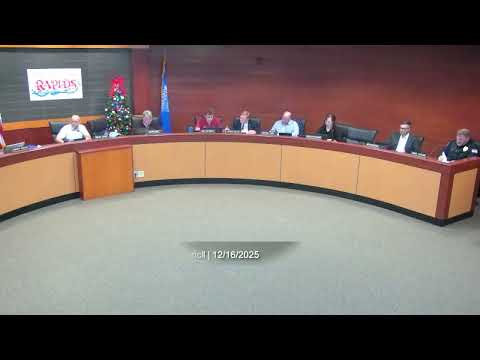
Wisconsin Rapids council approves LOI for 5‑MW solar array amid debate over wells, property values
Summary
The Common Council voted 5‑3 to approve a nonbinding letter of intent for a 5‑megawatt solar array to be hosted on city land, while referring a rezoning question back to the planning commission for further review (6‑2). Council members split over water‑well protection, property values and process timing.
Council members on Tuesday approved a nonbinding letter of intent (LOI) to pursue a 5‑megawatt solar array on about 25 acres of city‑owned land, voting 5‑3 to allow negotiations to continue while the planning commission and staff study remaining siting and protection issues.
Proponents said the project—structured as a behind‑the‑meter array hosted through Great Lakes Utilities and proposed by 1 Energy Renewables—could reduce peak demand by about 5 MW and produce significant long‑term savings for large industrial customers. Councilmember Austin said the developer disclosed a project cost ceiling of $15,000,000 and that the city’s only direct investment would be about $100,000 to connect the array; staff projected roughly $200,000 in annual energy savings beginning immediately and emphasized the LOI is nonbinding and intended to preserve federal incentives that expire at year‑end.
Opponents raised two related concerns: siting near municipal water‑supply wells and potential impacts on nearby homeowners’ property values. One councilmember pointed to federal and state guidance cautioning development within wellhead protection areas and urged prioritizing public‑water safety over tax revenue. Several councilmembers also criticized the timing and how the item appeared on the agenda, saying further public review and committee discussion were needed before committing to the LOI.
Supporters replied that the proposed site currently carries R‑2 zoning by default and that, as presented, the solar use would pose less risk to wells than residential development. Water and Light staff described modeling that attributes most savings to reductions in transmission and demand charges, noting residential savings are modest (city staff cited a conservative figure of roughly $630 per home over 30 years, about $1 per month) while large industrial customers could save more than $1,000,000 over the project lifetime.
The council also separately sent the rezoning matter tied to the parcel back to the planning commission for more study, voting 6‑2 to ask the commission to reconsider map changes and the land‑use implications before any zoning action returns to council.
Representatives from 1 Energy Renewables said lenders would typically take ownership of a project if the developer became insolvent and would seek buyers to keep the facility operating; company representatives said lender identity and financing terms would be disclosed later in the development process. Council members asked that contract protections be drafted into any future agreement, including vegetative screening, fencing, decommissioning guarantees and clear assignment of lender/ownership risk.
What happens next: The LOI does not create a binding obligation. Staff and legal will continue negotiations and return proposed contract language and any rezoning proposals to the planning commission and the council for further public discussion and final votes in the months ahead.