Get Full Government Meeting Transcripts, Videos, & Alerts Forever!
Get email alerts on the Ems Capacity topic
No spam. Unsubscribe anytime.
Public commenters press Carter County leaders on EMS strain after hospital changes; commissioners back grant-seeking and equipment options
Summary
Residents and emergency responders told the commission that a regional hospital merger and ICU closures have left local EMS stretched thin; commissioners discussed buying an automated CPR device and urged volunteer recruitment and staggered grants to improve coverage.
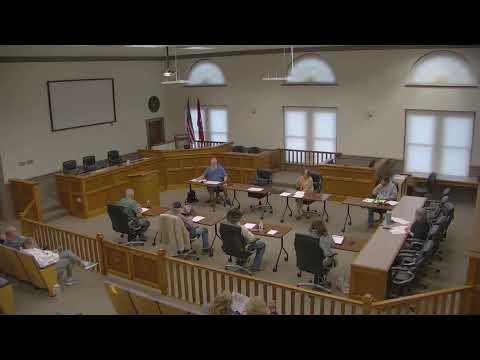
A group of residents and emergency responders told the Carter County Commission during public comment that recent changes at regional hospitals have stretched local emergency medical services and contributed to long ambulance waits.
A resident who spoke during the public-comment period said the hospital merger that closed a local intensive-care unit has lengthened transport and emergency-room wait times. "When they closed their ICU, they said the medical center is just a 10-minute ride down the road," the resident said. "They forgot to mention the three-hour wait. Some of our citizens are waiting in ambulances down there." The speaker urged public education to reduce nonemergency use of EMS and said they planned to seek grants for that outreach.
Sheriff's office and volunteer fire department representatives described recent calls in which no local ambulance was available and mutual aid units had to travel from neighboring counties. A sheriff's department representative said the county could benefit from a mechanical CPR device — commonly called a Lucas device — to sustain compressions during extended resuscitations and reduce provider fatigue. "That device can save lives," the speaker said, noting that the units can perform compressions and monitor the patient after being strapped on.
Commissioners discussed the device's training requirements and funding options. Staff and attendees said vendor training appears modest and that grants have funded similar purchases in neighboring counties; participants referenced grant timelines and suggested staggered applications so departments can pass used devices down the line as new purchases are made. Participants also cited cost considerations during the meeting: one exchange referenced a figure in the neighborhood of $20,000 for a device and noted that ambulance purchases can run roughly $150,000–$175,000.
The conversation also highlighted a broader staffing problem: volunteer shortages and recruitment challenges mean remote areas can remain uncovered even when equipment is available. Commissioners and emergency-service speakers described plans to build a new Station 2 — a project they estimate will take about 18 months to two years — and emphasized that a mix of volunteers, donations and mitigation funding will be needed to complete it.
Next steps identified at the meeting included encouraging individual volunteer departments to pursue grants with county support, exploring procurement options for a mechanical CPR device, and continuing discussions on public education about appropriate EMS use. No formal procurement was authorized at this meeting; commissioners advised departments to begin grant work and signaled county support for pursuing mitigation funds and equipment grants.